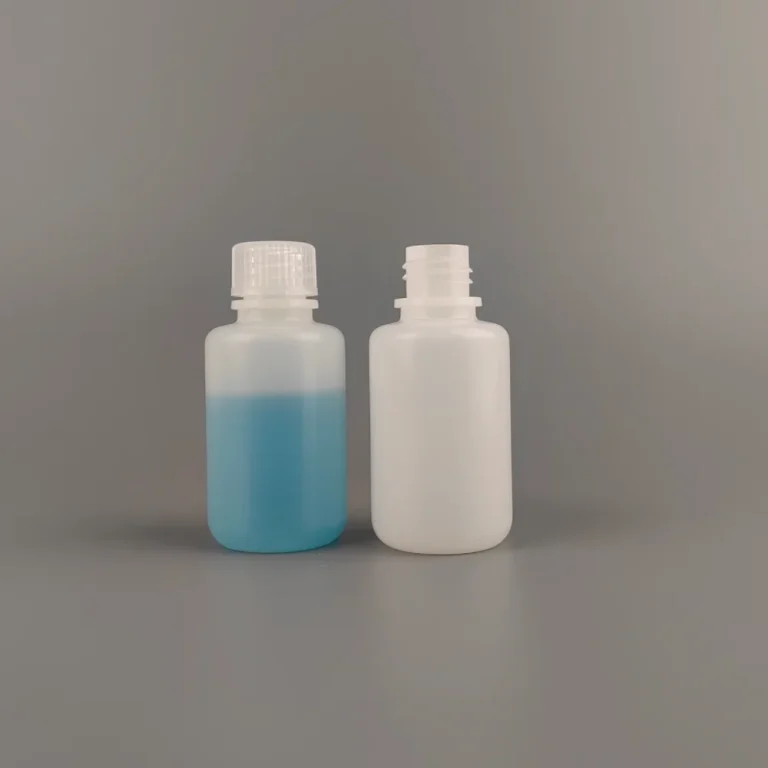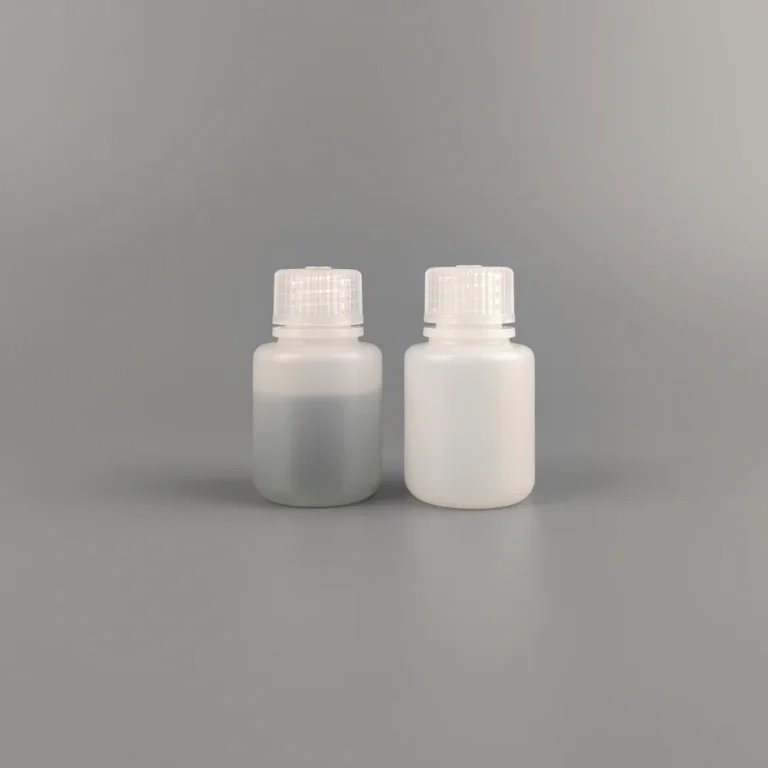
If a solvent stored in a clear bottle gradually loses volume over a week, the issue is often not evaporation alone—it’s permeability through the container wall. In other cases, a bottle that looks intact after chemical exposure may have already softened, affecting sealing torque and leading to micro-leakage during transport. These failures are material-driven and usually linked to incorrect selection between PET and HDPE.
From 15 years at JSBIO, PET and HDPE are both used in laboratories—but their performance differences are significant once temperature, chemicals, and sealing are involved.
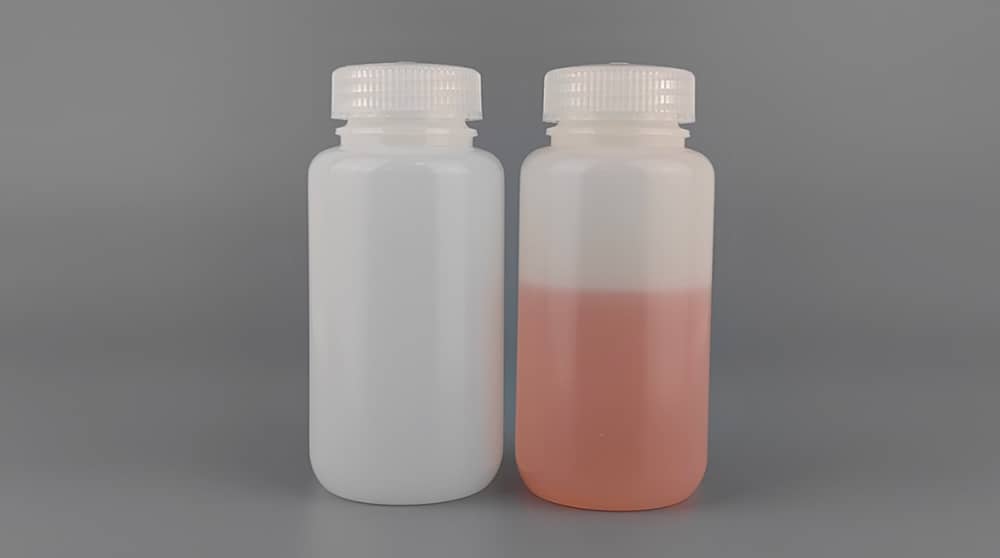
Technical Insights: PET vs HDPE Is Not Just Transparency
Material selection must consider:
- Temperature exposure (-80°C to 121°C range in lab workflows)
- Chemical compatibility (solvents, acids, buffers)
- Wall thickness behavior (permeation and strength)
- Sealing performance (leak-proof design)
- Mechanical limits (centrifugation, handling)
PET is often chosen for clarity. HDPE is chosen for chemical resistance. Neither is universal.
PET (Polyethylene Terephthalate) Bottle Performance
Typical characteristics:
- Temperature Range: 0°C to 60–70°C
- Max RCF: not suitable for centrifugation
- Wall Thickness: thin, optimized for clarity
- Sealing: standard threaded cap (gasket optional)
Behavior in Lab Use:
- High transparency → easy visual inspection
- Low gas permeability compared to some plastics
- Limited resistance to high temperatures
- Sensitive to strong chemicals and repeated stress
Limitations:
- Not autoclavable
- Not suitable for -80°C storage
- Can deform under heat or pressure
HDPE (High-Density Polyethylene) Bottle Performance
Typical characteristics:
- Temperature Range: -50°C to 110°C
- Max RCF: low (not designed for centrifugation)
- Wall Thickness: moderate, impact-resistant
- Sealing: threaded cap (can include leak-proof gasket)
Behavior in Lab Use:
- High resistance to acids and bases
- Durable under handling and transport
- Opaque → limits light exposure
- Better chemical compatibility than PET
Limitations:
- Not suitable for high-temperature autoclaving cycles
- Lower transparency
- Not designed for high-speed centrifugation
Chemical Compatibility Comparison
Aqueous Solutions
- PET: Stable
- HDPE: Stable
Acids and Bases
- PET: Moderate resistance
- HDPE: High resistance
HDPE is preferred for long-term storage of corrosive solutions.
Organic Solvents
- PET: Limited compatibility
- HDPE: Better resistance (varies by solvent)
Risk with PET:
- Surface degradation
- Increased permeability
Temperature Performance Comparison
- PET: limited to ambient and mild conditions
- HDPE: broader range, including moderate cold storage
Neither PET nor HDPE supports full lab range (-80°C to 121°C).
For that, PP is typically used.
Role of Wall Thickness
Wall thickness influences:
- Permeation rate
- Structural durability
- Resistance to deformation
PET:
- Thin walls for clarity → higher risk under stress
HDPE:
- Thicker, more flexible → better impact resistance
However:
- Uneven wall thickness in either material leads to failure under temperature or chemical exposure
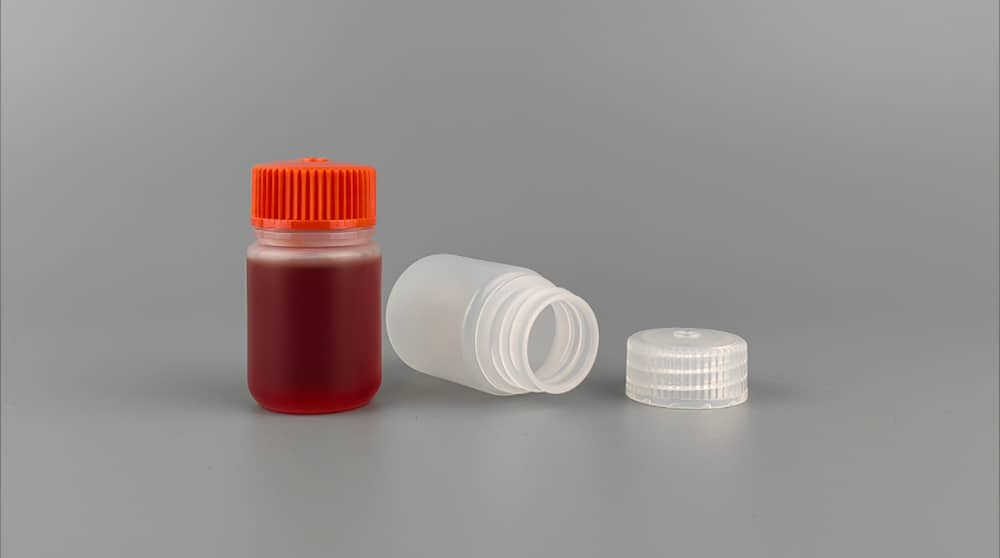
Sealing and Leak-Proof Design
Sealing performance depends on:
- Thread precision
- Cap torque
- Gasket presence
Standard differences:
- PET bottles: often basic sealing
- HDPE bottles: can include leak-proof gasket design
JSBIO design options:
- Multi-thread closure
- Integrated gasket for chemical resistance
- Torque-controlled sealing
Impact:
- Reduced leakage during transport
- Improved long-term storage stability
Mechanical Performance and Handling
Impact Resistance
- PET: rigid, more brittle under stress
- HDPE: flexible, better impact resistance
Centrifugation (Max RCF)
- PET: not applicable
- HDPE: limited use
Neither is suitable for high-speed centrifugation (15,000 × g range).
Technical Specifications Comparison
| Parameter | PET | HDPE |
| Temperature Range | 0°C to 60–70°C | -50°C to 110°C |
| Autoclavable | No | Limited |
| Max RCF | Not suitable | Low |
| Chemical Resistance | Moderate | High |
| Organic Solvent Resistance | Low | Moderate |
| Transparency | High | Opaque |
| Wall Thickness Control | Thin, clarity-focused | Moderate |
| Leak-proof Design | Basic | Optional (gasket) |
| Impact Resistance | Moderate | High |
Lab Tips: When to Use PET vs HDPE
Choose PET when:
✔ Visual inspection is critical
✔ Storing non-reactive aqueous solutions
✔ Working at room temperature
✔ Short-term storage
Choose HDPE when:
✔ Handling acids or bases
✔ Transporting chemicals
✔ Requiring impact resistance
✔ Long-term storage of reagents
Common Mistakes in Selection
- Using PET for chemical storage → degradation
- Using PET in temperature cycling → deformation
- Ignoring sealing requirements
- Selecting based on transparency only
- Using HDPE where sterilization is required
These issues often appear after extended use.
From a Supplier’s Perspective
Material choice is only part of the equation.
In OEM projects, we typically adjust:
- Wall thickness for permeability control
- Cap and thread design for sealing stability
- Gasket material for chemical compatibility
Two HDPE bottles can perform differently depending on these factors.
Practical Selection Checklist
Before choosing PET or HDPE:
✔ Is temperature within material limits?
✔ Is chemical compatibility verified?
✔ Is wall thickness appropriate for storage duration?
✔ Does the design include leak-proof sealing if needed?
✔ Is transparency required for your workflow?
✔ Are mechanical stresses (transport, pressure) considered?
CTA (For Procurement Decision)
If you are selecting PET or HDPE bottles for laboratory use:
A. Request free samples for validation
→ Test chemical exposure, sealing, and handling performance
B. Get a bulk quote and customization details
→ Optimize material, wall thickness, and sealing design for your application
If you can share your chemical type, storage duration, and temperature conditions, I can recommend the exact bottle structure and material configuration.