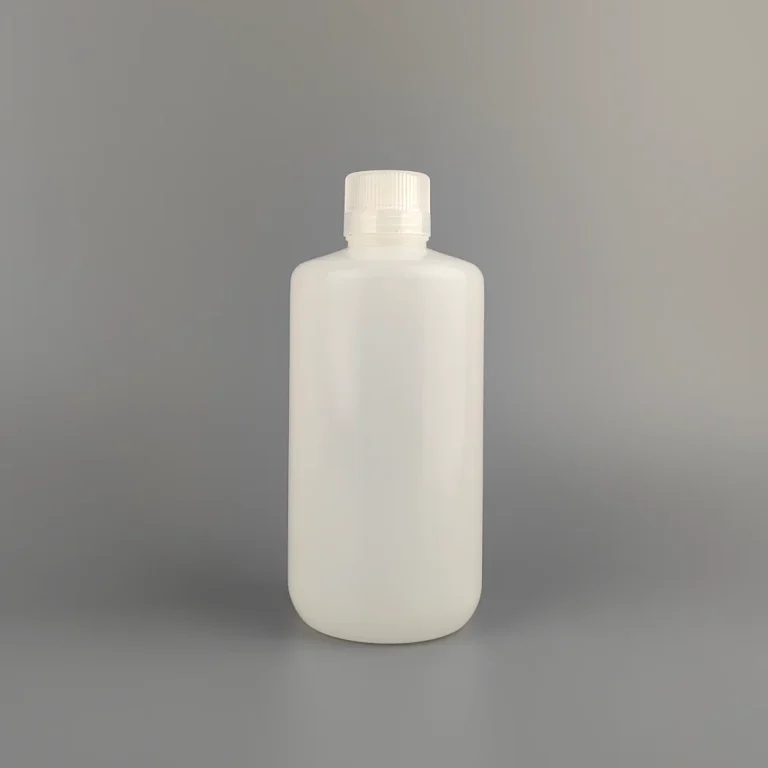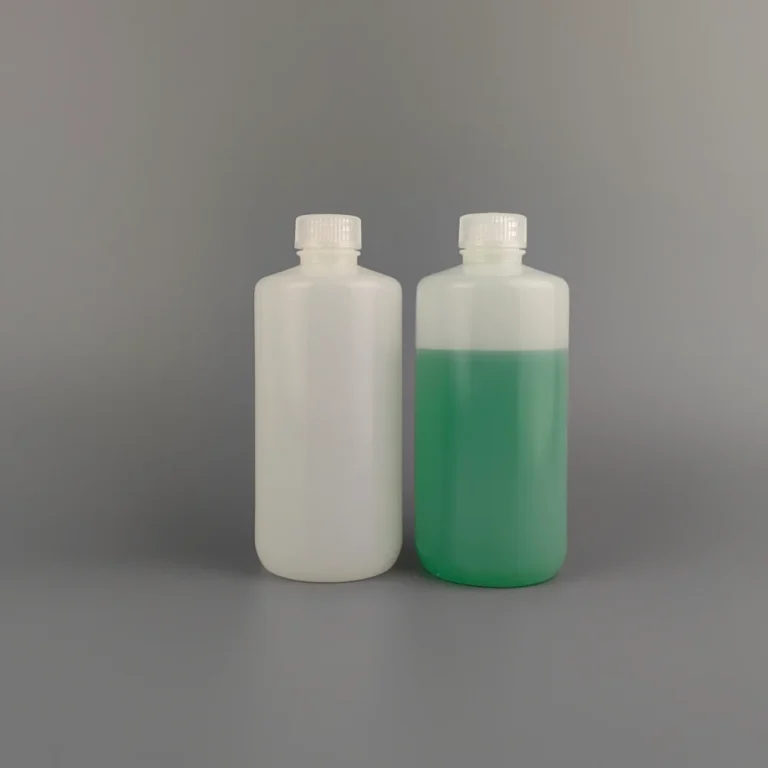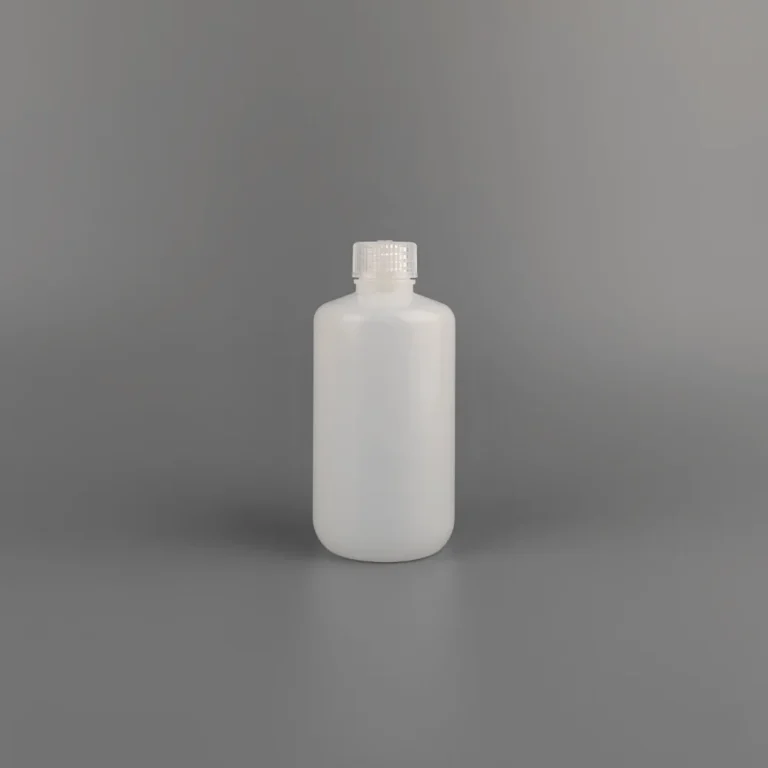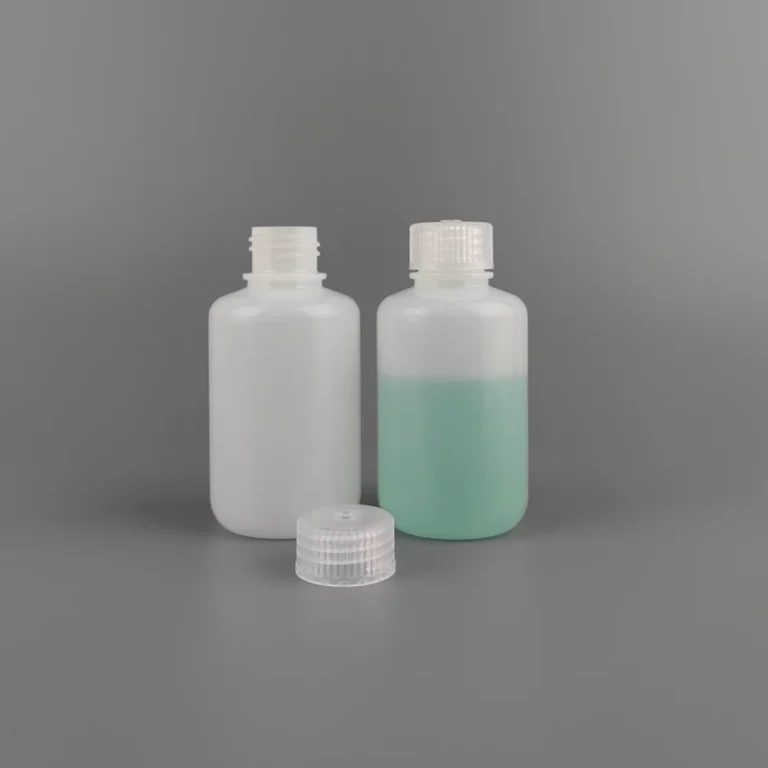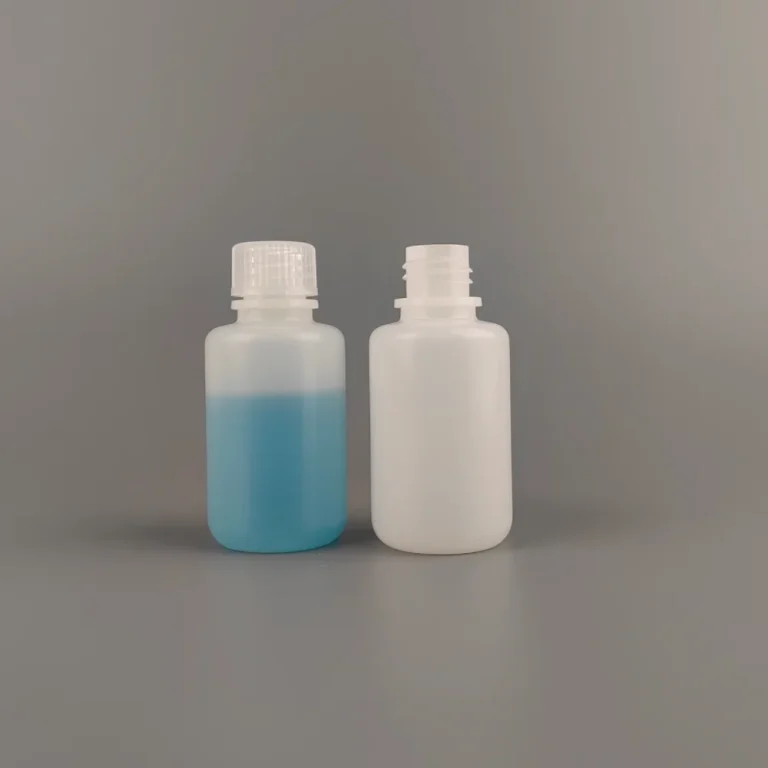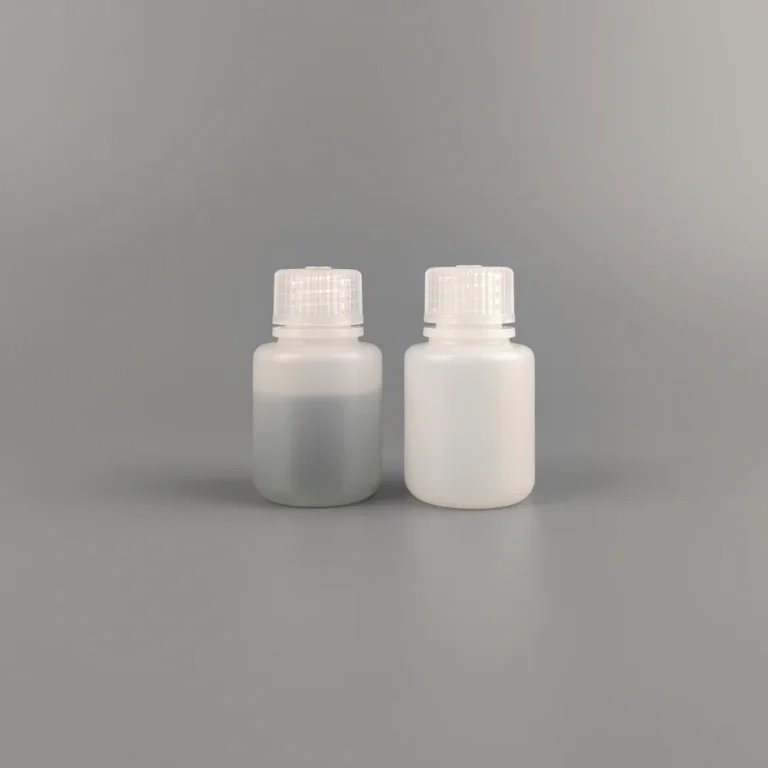
If a container collapses slightly after filling with a solvent and then fails to seal under light pressure, the issue is not the cap—it’s the material flexibility and wall structure. In other cases, a bottle that performs well during handling may slowly allow vapor permeation, affecting concentration over time. These failures often come from confusion between HDPE and LDPE.
From 15 years at JSBIO, HDPE and LDPE are often treated as interchangeable. They are not. Their differences show up under load, temperature, and long-term storage conditions.
Technical Insights: HDPE vs LDPE Is About Density and Structure
Both materials are polyethylene, but their molecular structures differ:
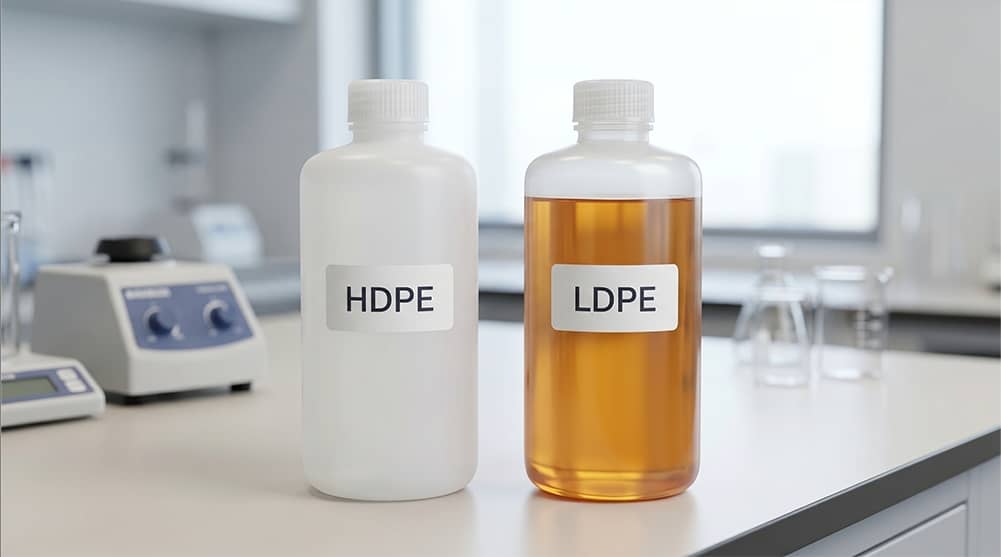
- HDPE (High-Density Polyethylene): linear structure, higher density
- LDPE (Low-Density Polyethylene): branched structure, lower density
This leads to differences in:
- Rigidity vs flexibility
- Permeability
- Temperature tolerance
- Mechanical strength
HDPE Container Performance
Typical parameters:
- Temperature Range: -50°C to 110°C
- Max RCF: low (not suitable for high-speed centrifugation)
- Wall Thickness: moderate, structurally stable
- Sealing: threaded cap, optional leak-proof gasket
Behavior in Lab Use:
- High rigidity → maintains shape under load
- Strong resistance to acids and bases
- Lower permeability compared to LDPE
- Suitable for stacking and transport
Limitations:
- Limited flexibility under stress
- Not ideal for repeated deformation
- Not suitable for high-temperature sterilization (121°C cycles)
LDPE Container Performance
Typical parameters:
- Temperature Range: -50°C to 80–90°C
- Max RCF: not suitable
- Wall Thickness: flexible, thinner structures possible
- Sealing: usually simple cap or dispensing design
Behavior in Lab Use:
- High flexibility → easy squeezing and dispensing
- Good resistance to aqueous solutions
- Higher permeability compared to HDPE
- Suitable for wash bottles and short-term use
Limitations:
- Lower mechanical strength
- Higher gas and vapor transmission
- Deforms under pressure or load
Mechanical Differences
Rigidity vs Flexibility
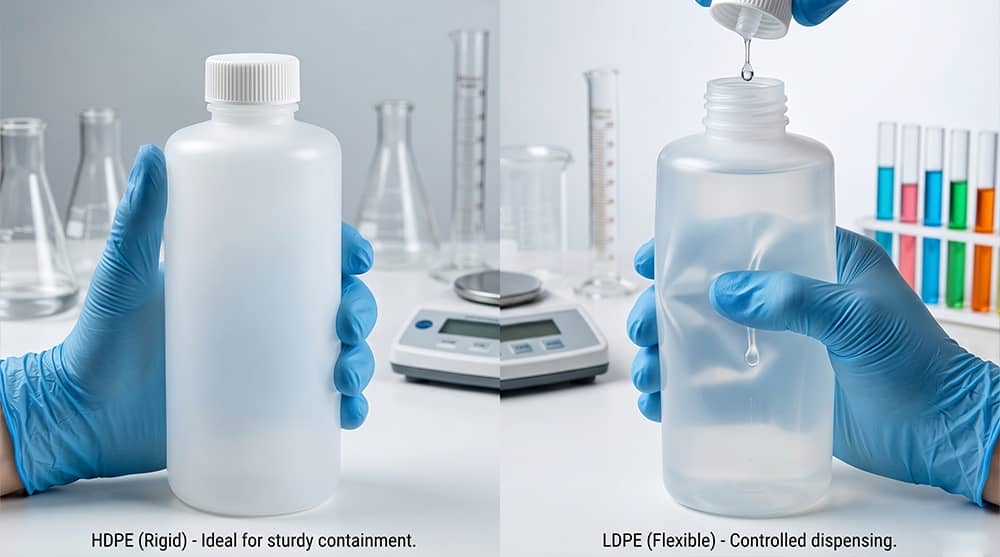
- HDPE: rigid, holds shape
- LDPE: flexible, easily deformed
Impact:
- HDPE → better for storage and transport
- LDPE → better for dispensing applications
Impact Resistance
- HDPE: high impact resistance
- LDPE: moderate, but absorbs deformation
Chemical Compatibility
Aqueous Solutions
- HDPE: stable
- LDPE: stable
Acids and Bases
- HDPE: high resistance
- LDPE: good resistance
Organic Solvents
- HDPE: moderate resistance
- LDPE: lower resistance and higher permeability
Risk with LDPE:
- Swelling
- Permeation
- Structural weakening over time
Permeability Differences
This is one of the most important distinctions.
- HDPE: lower permeability → better for long-term storage
- LDPE: higher permeability → not suitable for volatile substances
In practice:
- HDPE reduces evaporation and contamination
- LDPE allows faster gas exchange
Role of Wall Thickness
Wall thickness affects both materials differently.
HDPE:
- Uniform wall thickness improves structural stability
- Thicker walls reduce permeation
LDPE:
- Thin, flexible walls enable squeezing
- Increased permeability if walls are too thin
JSBIO design control:
- HDPE → thickness optimized for strength and storage
- LDPE → thickness optimized for flexibility without collapse
HDPE vs. LDPE: Understanding the Critical Differences
Polyethylene is the most widely used plastic resin in laboratory and industrial packaging. However, choosing between High-Density Polyethylene (HDPE) and Low-Density Polyethylene (LDPE) can significantly impact your product’s chemical storage stability, safety, and operational efficiency. Here is a professional breakdown of their differences.
Technical Specifications Comparison
| Property / Characteristic | HDPE (High Density) | LDPE (Low Density) |
|---|---|---|
| Molecular Structure | Linear structure, minimal branching | Highly branched structure |
| Rigidity & Flexibility | Rigid, hard, high tensile strength | Highly flexible, easily squeezable |
| Translucency | Opaque to translucent | Highly translucent to transparent |
| Max. Temperature Bounds | 120°C (Short term) / 110°C (Continuous) | 90°C (Short term) / 80°C (Continuous) |
| Chemical Resistance | Excellent (Higher resistance to solvents) | Good (Slightly more susceptible to absorption) |
Industry Applications: When to Choose Which?
🎯 Typical Applications for HDPE Containers:
Due to its superior strength and barrier properties, HDPE is the definitive choice for heavy-duty chemical packaging, wide-mouth bulk powder jars, rigid laboratory reagent bottles, and long-term storage of acids or bases where container deformation cannot be tolerated.
🎯 Typical Applications for LDPE Containers:
When user handling requires a flexible or compressible structure, LDPE excels. It is commonly engineered into laboratory wash bottles (squeeze bottles), precise dropper bottles for diagnostics, flexible tubing, and small-volume buffer solution dispensing containers.
Sealing and Leak-Proof Design
Sealing performance varies significantly.
HDPE:
- Threaded caps with optional leak-proof gasket design
- Suitable for transport and storage
LDPE:
- Often uses simple caps or dispensing nozzles
- Not designed for high sealing pressure
Impact:
- HDPE → reliable long-term sealing
- LDPE → suitable for controlled dispensing, not storage
Temperature Performance
- HDPE: up to ~110°C (limited sterilization capability)
- LDPE: up to ~80–90°C
Neither material supports full lab range (-80°C to 121°C with autoclaving).
For that, PP is typically used.
Centrifugation (Max RCF)
- HDPE: low tolerance
- LDPE: not applicable
Neither material is designed for high-speed centrifugation (10,000 × g+).
Technical Specifications Comparison
| Parameter | HDPE | LDPE |
| Temperature Range | -50°C to 110°C | -50°C to 80–90°C |
| Autoclavable | Limited | No |
| Max RCF | Low | Not suitable |
| Chemical Resistance | High | Moderate |
| Organic Solvent Resistance | Moderate | Low |
| Permeability | Low | High |
| Wall Thickness Control | Moderate | Flexible, thinner |
| Leak-proof Design | Optional (gasket) | Basic |
| Structural Strength | High | Low |
| Flexibility | Low | High |
Lab Tips: When to Use HDPE vs LDPE
Choose HDPE when:
✔ Long-term storage is required
✔ Handling acids or bases
✔ Low permeability is important
✔ Transport and stacking are involved
✔ Leak-proof sealing is needed
Choose LDPE when:
✔ Squeezing or dispensing is required
✔ Short-term use
✔ Working with non-volatile liquids
✔ Flexibility is more important than strength
Common Mistakes in Selection
- Using LDPE for long-term storage → evaporation loss
- Using LDPE with solvents → permeation issues
- Using HDPE where flexibility is required
- Ignoring sealing requirements
- Selecting based only on cost
These issues typically appear over time.
From a Supplier’s Perspective
Material selection alone does not define performance.
In OEM projects, we adjust:
- Wall thickness distribution
- Cap structure and sealing system
- Gasket material (for HDPE containers)
- Structural reinforcement for transport
Two HDPE or LDPE containers can perform differently depending on these design factors.
Practical Selection Checklist
Before choosing HDPE or LDPE:
✔ Is long-term storage required?
✔ Is permeability a concern?
✔ Is flexibility needed for dispensing?
✔ Are chemicals compatible with the material?
✔ Is leak-proof sealing required?
✔ Are temperature limits within range?
CTA (For Procurement Decision)
If you are selecting between HDPE and LDPE containers:
A. Request free samples for validation
→ Test permeability, sealing, and handling performance
B. Get a bulk quote and customization details
→ Optimize wall thickness, material, and sealing design for your application
If you can share your use case (storage vs dispensing, chemical type, duration), I can help define the exact material and container configuration.