
In PCB manufacturing, photoresists are among the most sensitive materials used during imaging and pattern transfer processes. Whether you are handling liquid photoresists, solder mask formulations, developer solutions, or photo-imaging chemicals, selecting the wrong storage container can lead to contamination, premature degradation, leakage, and unnecessary production losses.
Many manufacturers focus heavily on photoresist formulations while overlooking one critical factor: the bottle itself.
This article explains how to choose the right bottle for PCB photoresist storage and why packaging design plays a major role in maintaining chemical stability throughout storage and transportation.
Why Packaging Matters for PCB Photoresists
PCB photoresists are often stored for weeks or months before use. During this period, they may be exposed to:
- Ambient light
- UV radiation
- Temperature fluctuations
- Long-distance transportation
- Repeated opening and closing
- Chemical interaction with packaging materials
Poor packaging can result in:
- Increased viscosity
- Solvent evaporation
- Leakage during transportation
- Product contamination
- Reduced coating performance
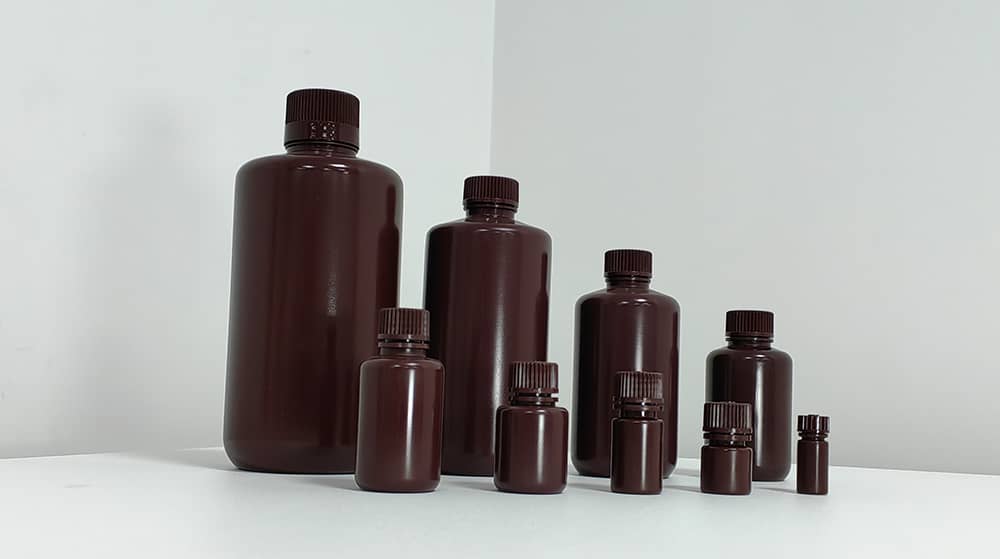
Critical Standards for PCB Photoresist Storage
1. Superior UV Protection
Our amber HDPE/PP materials provide an effective barrier against light degradation, ensuring the chemical stability of photoresists during extended storage.
2. Zero-Contamination Sealing
Featuring advanced linerless inner-cone technology, we eliminate particle contamination risks from foam liners, guaranteeing integrity for international transit.
3. Rigorous Chemical Compatibility
Manufactured from high-purity HDPE and PP, our containers offer exceptional resistance to developers, stripping solutions, and specialty electronic reagents.
For chemical suppliers and PCB manufacturers, these issues can quickly become expensive quality-control problems.
The Three Most Important Factors When Selecting a Photoresist Bottle
1. Light Protection
Many photoresist formulations contain photosensitive components that react to UV light. Using [amber chemical storage bottles] is the industry standard to prevent premature degradation. For PCB liquid photoresists and UV-curable formulations, amber HDPE and PP are preferred over clear containers.
Amber bottles are commonly used because they help reduce light exposure and provide additional protection during storage and transportation.
Typical applications include:
- PCB liquid photoresists
- UV-curable photoresists
- Photo-imaging chemicals
- Photopolymers
- UV-sensitive laboratory formulations
For these applications, amber HDPE and amber PP bottles are generally preferred over clear containers.
2. Leak-Proof Sealing Performance
Transportation is where most packaging failures occur. To prevent leakage during international transit, we recommend using [linerless inner-cone sealing] designs. Unlike traditional caps with foam liners that degrade, this plastic-to-plastic seal is essential for maintaining the purity of [specialty electronic chemicals].
A bottle may perform perfectly in the laboratory but fail after being shipped internationally by air or sea freight.
One common problem is liner degradation. Traditional caps often rely on foam liners that can deteriorate after prolonged exposure to certain chemicals.
A linerless inner cone sealing design offers several advantages:
- Direct plastic-to-plastic sealing
- Reduced contamination risk
- No liner particles entering the chemical
- Improved leak resistance during transport
For PCB chemical suppliers shipping samples globally, sealing performance is often just as important as chemical compatibility.
3. Chemical Compatibility
Not all plastics are equal. For [PCB photoresist storage], HDPE and PP remain the gold standard due to their resistance to acids, alkalis, and solvents.
For PCB photoresist applications, HDPE and PP remain two of the most widely used materials due to their excellent resistance to many laboratory and industrial chemicals.
These materials generally perform well with:
- Dilute acids
- Alkalis
- Alcohols
- Aldehydes
- Esters
- Aliphatic hydrocarbons
This makes them suitable for many PCB-related chemical storage applications, including photoresists, developers, stripping solutions, and laboratory reagents.
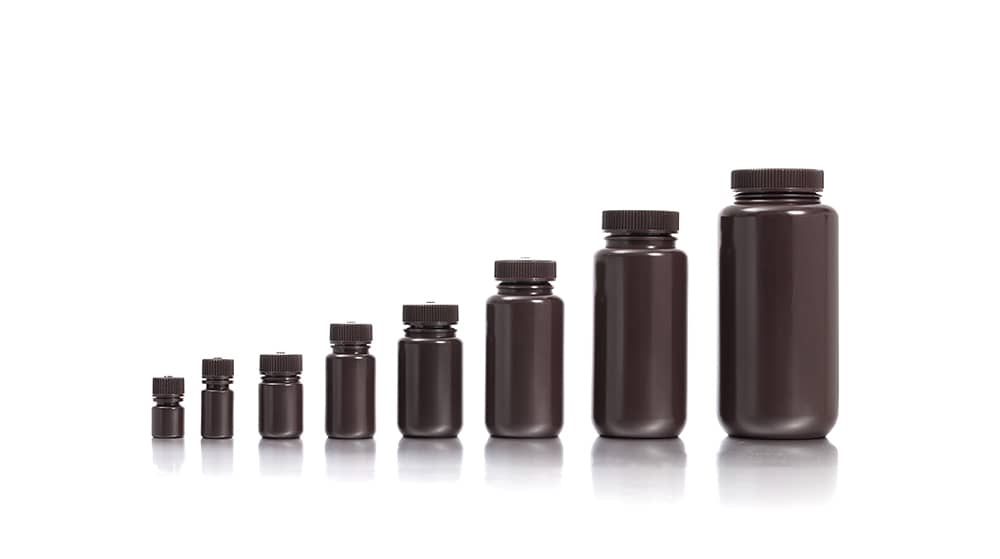
HDPE vs PP: Which Material Should You Choose?
Both materials are widely used in the electronics chemical industry, but each offers unique advantages.
HDPE Bottles
HDPE bottles are known for:
- Excellent impact resistance
- Flexibility during transportation
- Lower packaging costs
- Strong chemical compatibility
They are often selected for:
- Bulk chemical packaging
- International shipping
- Production-scale storage
- Customer sample distribution
PP Bottles
PP bottles provide:
- Higher rigidity
- Autoclavable performance up to 121°C
- Excellent dimensional stability
- Enhanced performance in high-temperature environments
They are commonly used for:
- Laboratory applications
- High-purity reagents
- Research environments
- Specialty chemical formulations
For many PCB manufacturers, HDPE is the preferred option for logistics and commercial packaging, while PP is often selected for laboratory and process-development applications.
Choosing the Right Bottle Size
The required bottle size often depends on the stage of production.
R&D and Formula Development
Recommended sizes:
- 4ml
- 8ml
- 15ml
- 30ml
Suitable for:
- Formula screening
- Laboratory testing
- Internal qualification
Customer Sampling and Validation
Recommended sizes:
- 60ml
- 125ml
- 250ml
Suitable for:
- Customer samples
- Pilot production
- Process validation
Production and Commercial Packaging
Recommended sizes:
- 500ml
- 1000ml
Suitable for:
- Bulk storage
- Manufacturing operations
- International transportation
Using a standardized bottle family across all development stages can simplify procurement and packaging management.
Why Wide-Mouth Bottles Are Becoming More Popular
Many electronics chemical suppliers are moving toward wide-mouth bottle designs.
Compared with narrow-neck containers, wide-mouth bottles offer:
- Easier filling operations
- Faster pouring
- Better cleaning efficiency
- Improved handling of higher-viscosity materials
These advantages are especially valuable when working with photoresists, solder mask materials, and other specialty chemicals used in PCB manufacturing.
A Practical Packaging Strategy for PCB Chemical Suppliers
A common approach used by chemical manufacturers is:
- 4ml–30ml bottles for laboratory development
- 60ml–250ml bottles for customer qualification
- 500ml–1000ml bottles for commercial packaging
Using the same bottle design across all sizes helps maintain consistency throughout the supply chain while reducing packaging qualification requirements.
Selecting the right bottle for PCB photoresist storage is not simply a packaging decision. It directly affects product quality, transportation safety, customer satisfaction, and long-term operating costs.
For most PCB photoresist and photo-imaging chemical applications, amber HDPE and PP bottles with reliable linerless sealing systems provide an effective combination of light protection, chemical resistance, and leak-proof performance.
As electronics manufacturing continues to demand higher consistency and cleaner chemical handling, choosing the right storage bottle becomes an important part of the overall process control strategy.