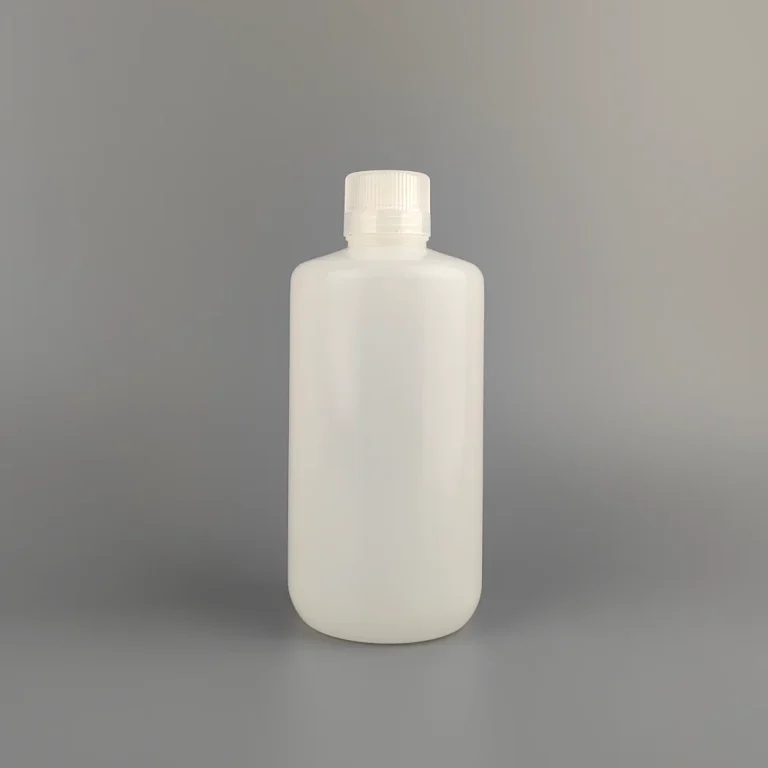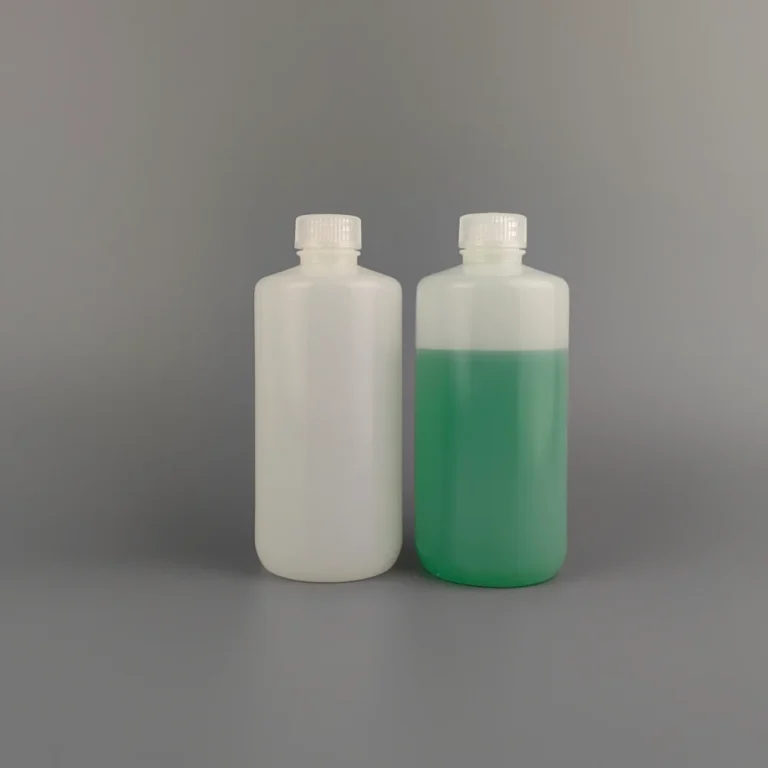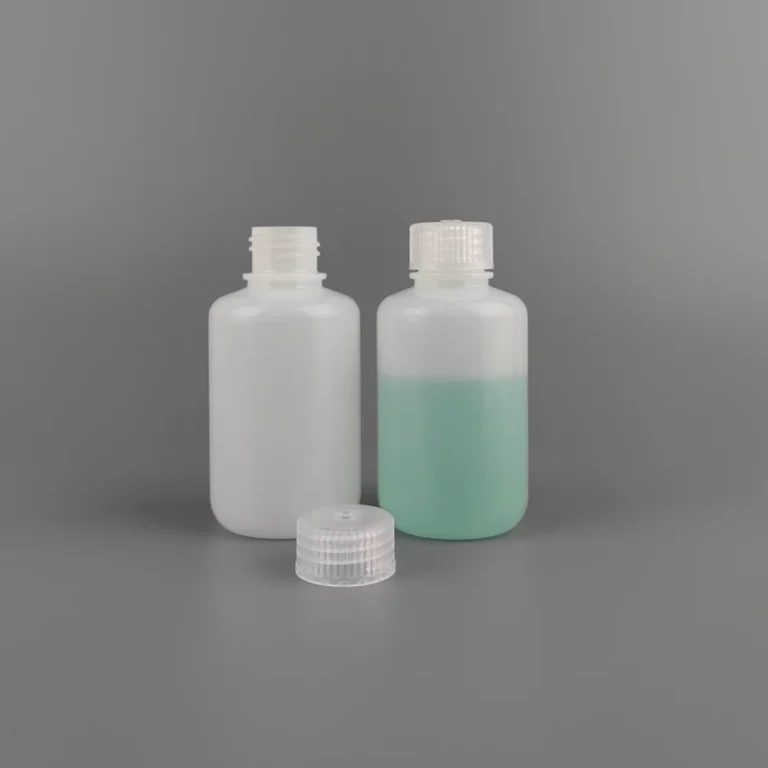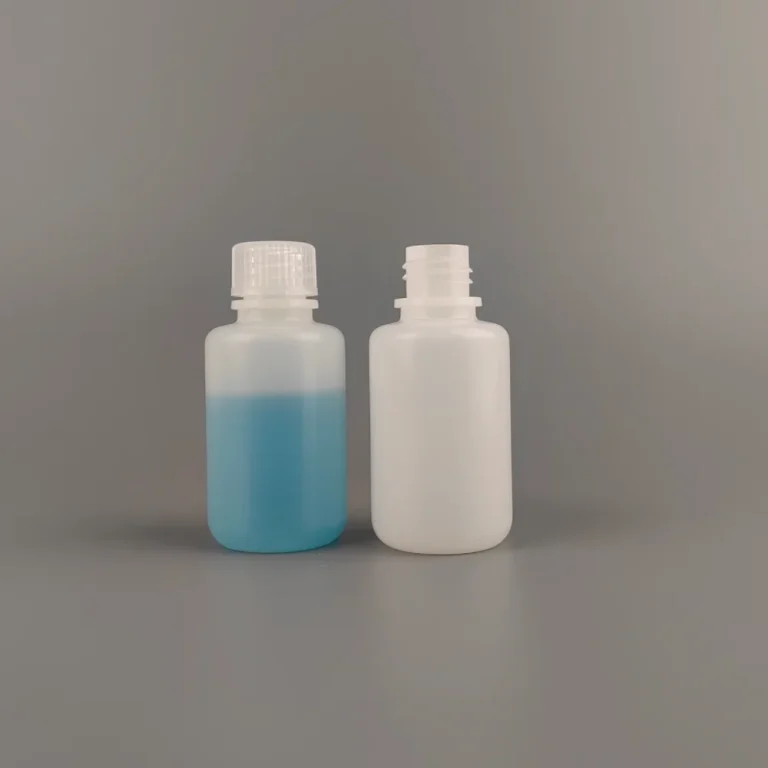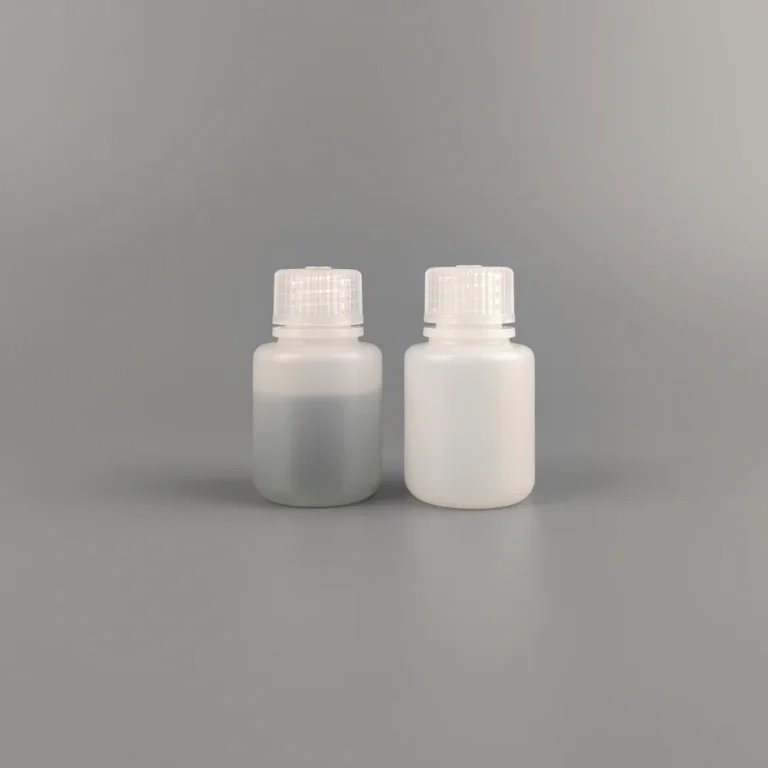
Looking for Lab-Grade Storage Solutions?
Whether you need high chemical resistance for volatile samples or secure long-term storage for biological specimens, our HDPE reagent bottles are manufactured to meet rigorous laboratory quality standards. Designed for professional use, they provide the durability and chemical stability your experiments demand. [Explore Our HDPE Lab Bottles & Get a Quote]
If a buffer looks unchanged after storage but later shows unexpected pH drift, the issue may not be the formulation—it can be slow interaction with the container. In other cases, a bottle holding a mild solvent begins to soften at the thread area, reducing cap torque and causing micro-leakage during transport. These failures are typically linked to material compatibility and structural design, especially when choosing between PP and HDPE.
From 15 years at JSBIO, PP and HDPE are both widely used. The difference is not theoretical—it shows up under chemical exposure, temperature cycling (-80°C to 121°C), wall thickness control, sealing design, and mechanical stress (Max RCF).
Technical Insights: What “Chemical Resistance” Means in Practice
Chemical resistance is influenced by:
- Polymer structure (PP vs HDPE)
- Contact duration (hours vs months)
- Temperature exposure (ambient vs autoclave)
- Wall Thickness (permeation rate)
- Sealing system behavior (gasket compatibility)
A container that appears stable short-term may degrade under long-term exposure or elevated temperature.
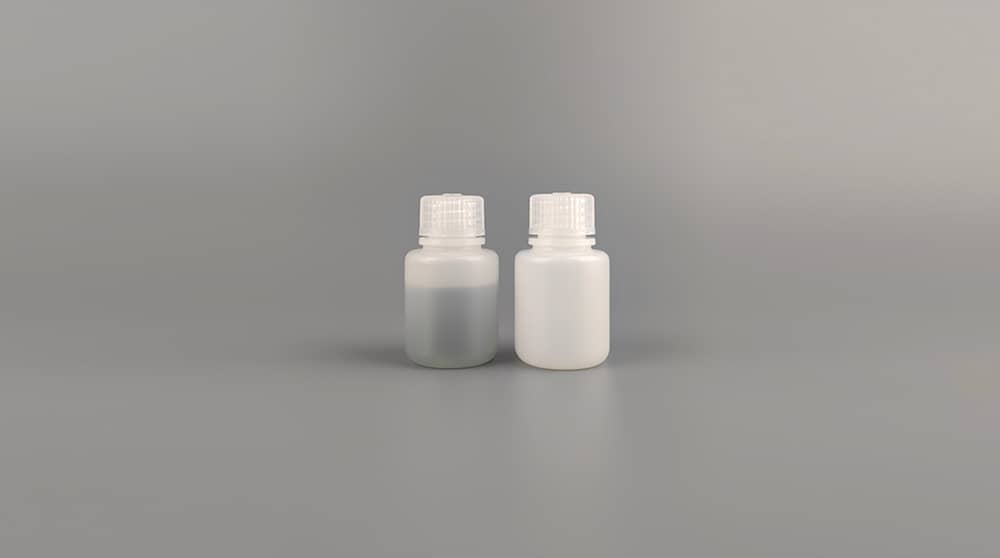
Polypropylene (PP): Chemical Resistance Profile
Typical parameters:
- Temperature Range: -80°C to 121°C
- Max RCF: up to 15,000–20,000 × g
- Wall Thickness: high precision, uniform
- Sealing: multi-thread + leak-proof gasket
Chemical Behavior:
- Strong resistance to aqueous solutions
- Good compatibility with weak acids and bases
- Limited resistance to strong organic solvents (e.g., aromatics, chlorinated solvents)
Practical Observations:
- Stable under repeated temperature cycling
- Low extractables for biological and pharmaceutical use
- Suitable for centrifugation and sterile workflows
High-Density Polyethylene (HDPE): Chemical Resistance Profile
Typical parameters:
- Temperature Range: -50°C to 110°C
- Max RCF: low (not designed for high-speed centrifugation)
- Wall Thickness: moderate consistency
- Sealing: threaded cap, optional gasket
Chemical Behavior:
- Very high resistance to acids and bases
- Better tolerance to certain organic solvents compared to PP
- Lower resistance to high-temperature chemical exposure
Practical Observations:
- Preferred for bulk chemical storage
- Stable in corrosive environments
- Not suitable for autoclaving cycles
Chemical Compatibility by Category
1. Aqueous Solutions
- PP: stable
- HDPE: stable
Both materials perform reliably.
2. Acids and Bases
- PP: good resistance
- HDPE: very high resistance
HDPE is often preferred for long-term storage of strong acids.
3. Organic Solvents
- PP: limited compatibility
- HDPE: moderate to good (depends on solvent type)
Risk factors:
- Material swelling
- Loss of mechanical strength
- Seal degradation
4. Alcohols and Buffers
- PP: stable
- HDPE: stable
Both materials are suitable for routine lab applications.
Role of Wall Thickness in Chemical Resistance
Wall thickness affects:
- Permeation rate
- Structural durability
- Chemical attack resistance
Failure patterns:
- Thin or uneven walls → faster permeation
- Stress concentration → localized degradation
JSBIO approach:
- Controlled wall thickness uniformity
- Reinforced high-stress areas
This improves both chemical resistance and long-term stability.
Sealing System and Chemical Exposure
Sealing performance is critical when storing chemicals.
Key factors:
- Gasket compatibility with chemicals
- Thread precision under stress
- Long-term sealing under vapor exposure
JSBIO sealing design:
- Multi-thread closure
- Integrated leak-proof gasket design
- Torque-controlled cap system
Observed results:
- Reduced evaporation
- Stable sealing after chemical exposure
- Lower contamination risk
Sealing System and Chemical Exposure: Why Linerless Integration Prevents Failure
In over 85% of laboratory liquid storage failures, the leak or contamination does not occur through the bottle wall—it occurs at the cap interface due to chemical degradation of the sealing component.
The Linerless Advantage: Zero Gaskets, Zero Leaching Risks
Many commercial plastic lab bottles rely on additional rubber, EPDM, or foam liners to achieve a temporary seal. However, in aggressive chemical environments, these multi-material gaskets are highly vulnerable to swelling, micro-cracking, and chemical leaching, which can fatally contaminate sensitive bio-samples or high-purity industrial reagents.
To eliminate this critical vulnerability, our manufacturing line utilizes an advanced Linerless Plug Seal (Integrated Bevel Valve Design):
- Engineered Triangle Bevel: The interior of our screw cap features a precisely molded, continuous triangular ridge. When standard closure torque is applied, this bevel creates a high-pressure, interference-fit line contact against the inner chamfer of the bottle lip.
- Dual-Surface Compression Seal: As the cap is torqued, the wedge action forms a continuous hermetic barrier, automatically adapting to micro-tolerances without needing an unstable chemical elastomer liner.
- 100% Monomaterial Integrity: Because both the bottle body and the sealing interface are constructed from pure, virgin polymer (PP or HDPE), there is zero risk of adhesive failure or chemical leaching from composite materials.
Our advanced injection molding processes maintain a strict ±0.05mm structural tolerance on both the bottle neck and the internal cap geometry. This ensures that the sealing line remains completely volatile-proof, preventing solvent evaporation and micro-leakage even under the rigorous physical stress of international air transport pressure differentials.
High-Precision Chemical Compatibility Reference Chart (at 20°C)
When sourcing premium laboratory plasticware, selecting the correct polymer prevents cross-contamination and container structural failure. The table below outlines the continuous chemical resistance performance of our high-grade Polypropylene (PP) and High-Density Polyethylene (HDPE) resins against common laboratory reagents and aggressive solvents.
| Chemical Agent & Concentration | CAS Number | Polypropylene (PP) | High-Density Polyethylene (HDPE) | Technical Notes & Long-Term Risk Assessment |
|---|---|---|---|---|
| Hydrochloric Acid (HCl) 37% | 7647-01-0 | Excellent | Excellent | Highly stable; no polymer matrix degradation for long-term storage. |
| Nitric Acid (HNO3) 65% | 7697-37-2 | Poor | Fair / Good | PP suffers severe oxidative yellowing and brittleness. HDPE is preferred for lower concentrations. |
| Sulfuric Acid (H2SO4) 98% | 7664-93-9 | Poor | Fair | Highly oxidizing acid. Causes micro-stress cracking under environmental stress. |
| Sodium Hydroxide (NaOH) 50% | 1310-73-2 | Excellent | Excellent | Complete resistance to caustic alkalis. Zero saponification or extraction risks. |
| Acetone (99.5%) | 67-64-1 | Good | Good | Minor permeation over extended periods; PP exhibits slight swelling but retains mechanical shape. |
| Chloroform | 67-66-3 | Poor | Fair | Halogenated organic solvent. Causes severe matrix softening and vapor loss in PP containers. |
| Ethanol (Absolute / 95%) | 64-17-5 | Excellent | Excellent | Zero extractables detected; ideal for liquid chromatography (HPLC) and cell culture buffer storage. |
| Toluene | 108-88-3 | Poor | Fair | Aromatic hydrocarbon. Causes severe plasticized swelling and rapid closure-torque loss in standard PP. |
| Hydrogen Peroxide (H2O2) 30% | 7722-84-1 | Good | Excellent | Strong oxidizer. HDPE exhibits superior continuous resistance against radical polymer chain degradation. |
Rating Criteria: Excellent = Safe for continuous long-term preservation | Good = Minor swelling/permeation, acceptable for short-term workflows | Fair = Intermittent contact only, high limitations | Poor = Rapid degradation/leaking risk, do not use.
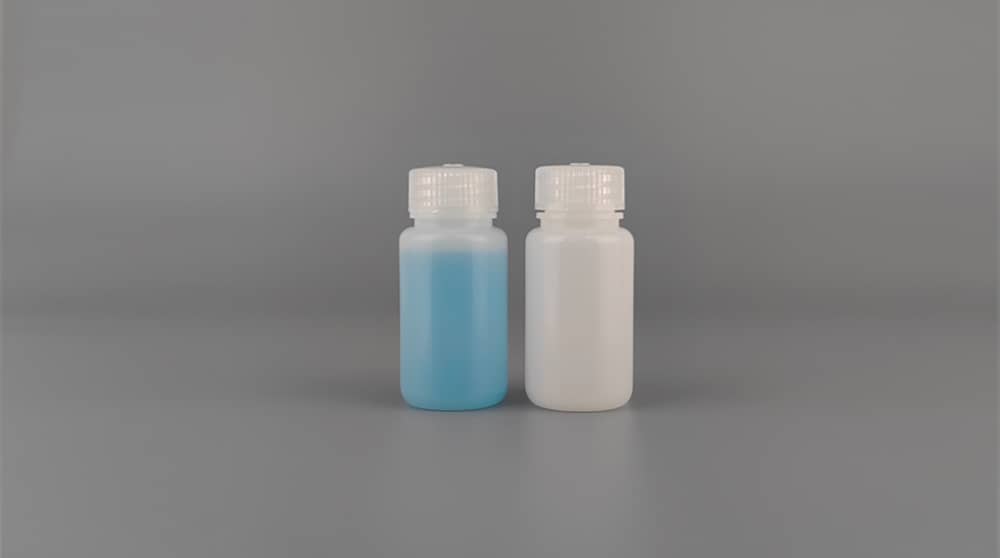
Temperature and Chemical Interaction
Temperature changes chemical behavior.
At Elevated Temperature (e.g., 121°C):
- Reaction rates increase
- Material softening may occur
- Seal integrity is affected
At Low Temperature (-80°C):
- Material becomes less flexible
- Stress concentration increases
PP maintains performance across this range. HDPE has limitations at higher temperatures.
Centrifugation Considerations (Max RCF)
Chemical workflows may involve centrifugation.
- PP: up to 15,000 × g
- HDPE: not suitable for high RCF
Incorrect selection may lead to:
- Deformation
- Leakage
- Sample loss
Technical Specifications Comparison
| Parameter | Polypropylene (PP) | HDPE |
| Temperature Range | -80°C to 121°C | -50°C to 110°C |
| Autoclavable | Yes | Limited |
| Max RCF | Up to 20,000 × g | Low |
| Chemical Resistance (General) | High | Very High |
| Acid/Base Resistance | High | Very High |
| Organic Solvent Resistance | Moderate | Better (varies) |
| Wall Thickness Control | High precision | Medium |
| Leak-proof Design | Advanced (gasket + thread) | Optional |
| Structural Stability | High | Moderate |
Lab Tips: Selecting Between PP and HDPE
✔ Use PP for temperature-sensitive workflows (-80°C to 121°C)
✔ Use HDPE for strong acids and corrosive chemicals
✔ Verify compatibility with specific solvents
✔ Check wall thickness consistency for long-term storage
✔ Ensure leak-proof sealing for volatile substances
✔ Confirm Max RCF if centrifugation is required
Common Mistakes in Chemical Storage
- Using PP with aggressive organic solvents
- Using HDPE in autoclave cycles
- Ignoring gasket compatibility
- Selecting containers based only on cost
- Overlooking temperature effects on chemical interaction
These issues often appear during extended use.
From a Supplier’s Perspective
Chemical resistance is not determined by material alone.
In OEM projects, we optimize:
- Material grade (PP vs HDPE variants)
- Wall thickness distribution
- Gasket material selection
- Thread design for sealing stability
Two containers labeled “PP” or “HDPE” can behave differently depending on these design factors.
Practical Selection Checklist
Before selecting a container:
✔ Is the chemical type clearly defined?
✔ Is the material (PP/HDPE) compatible with it?
✔ Does the container support -80°C to 121°C if needed?
✔ Is wall thickness uniform and controlled?
✔ Does the sealing include a leak-proof gasket?
✔ Has long-term compatibility been evaluated?
If you are evaluating chemical resistance for lab containers:
A. Request free samples for validation
→ Test chemical exposure, temperature cycles, and sealing performance
B. Get a bulk quote and customization details
→ Define material, wall thickness, and sealing design for your application
If you can share your chemical types, storage duration, and temperature conditions, I can map them to specific container materials and structural specifications.
Frequently Asked Questions (FAQ)
Why do some PP bottles crack during -80°C freeze-thaw cycles if the material range allows it?
Standard commercial Polypropylene exhibits a glass transition temperature (Tg) around 0°C, causing it to become brittle when frozen. However, our specialized laboratory-grade PP is synthesized as a random copolymer with impact-resistant additives. If a container cracks at -80°C, it is typically caused by uneven wall thickness (causing localized stress concentration during liquid expansion) or excessive centrifugal force applied before the frozen sample completely thawed. Our controlled injection process guarantees uniform wall distribution to prevent this failure.
Are your plastic reagent bottles compliant with FDA material standards?
Yes. All our Polypropylene (PP) and High-Density Polyethylene (HDPE) laboratory containers are manufactured strictly from 100% virgin, medical-grade and analytical-grade resins. These raw materials are fully compliant with FDA 21 CFR 177.1520 regulations for safe olefin polymers in food and pharmaceutical contact applications. This guarantees zero chemical leaching, zero additives, and maximum heavy-metal free purity during prolonged sample preservation in critical laboratory workflows.
Which container is better for biological sample storage??
For many long-term biological sample storage requirements, HDPE (High-Density Polyethylene) is commonly selected over PP due to its moisture barrier properties and chemical characteristics. It is used to help maintain sample integrity over extended periods. At PlasticBottles, our HDPE reagent bottles are manufactured to provide consistent quality for general laboratory applications. [Learn more about our HDPE specifications here.]