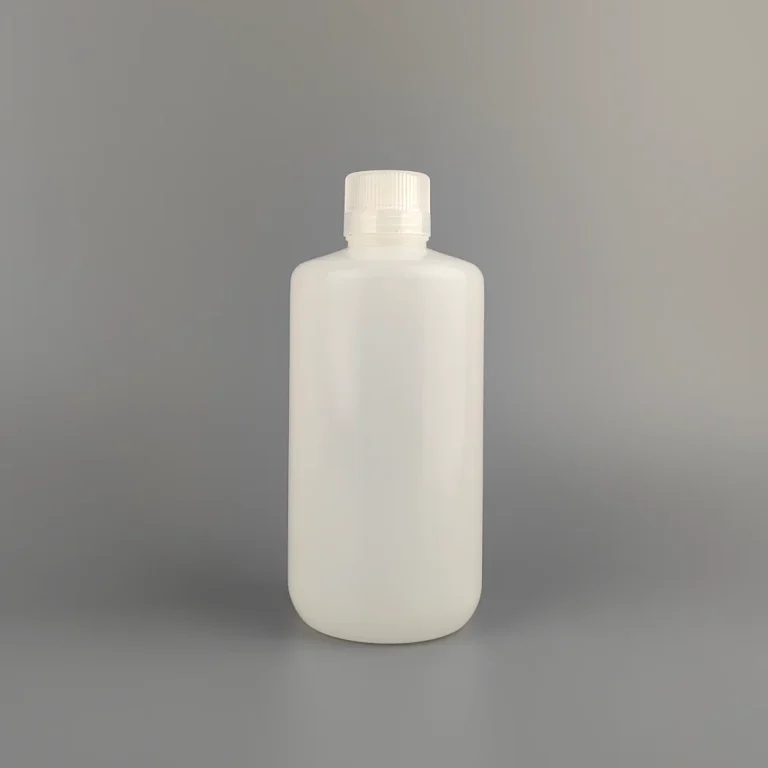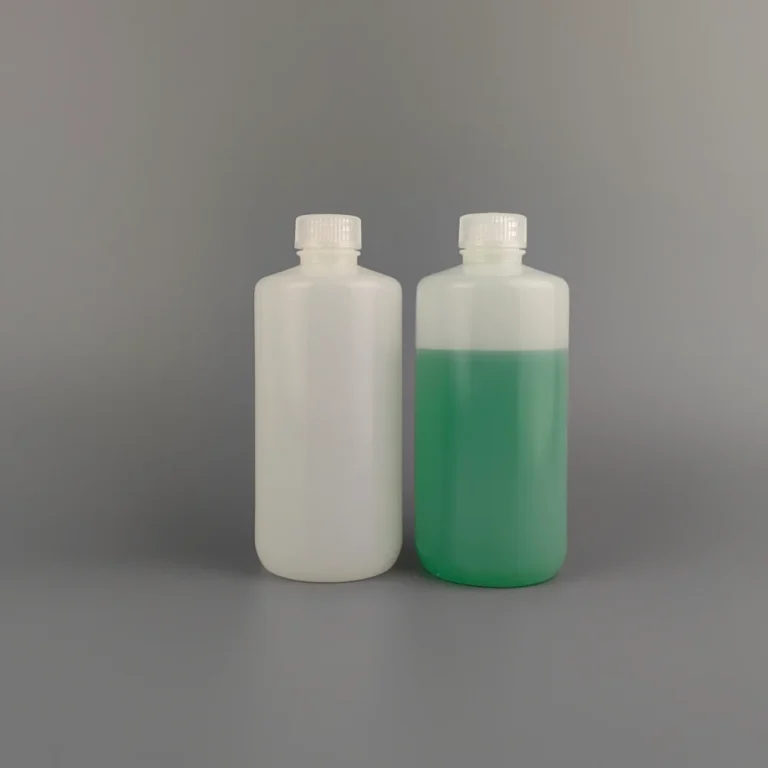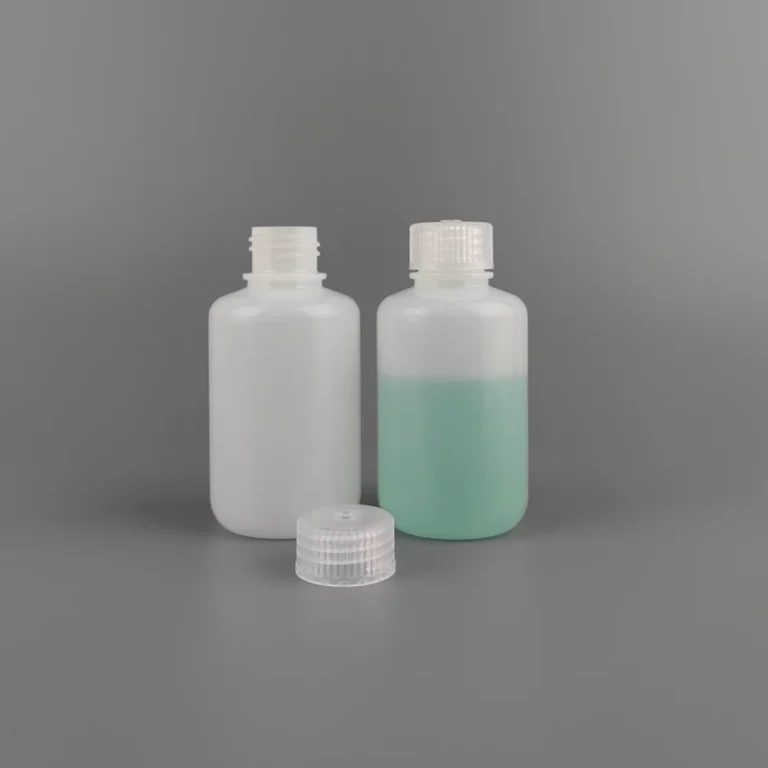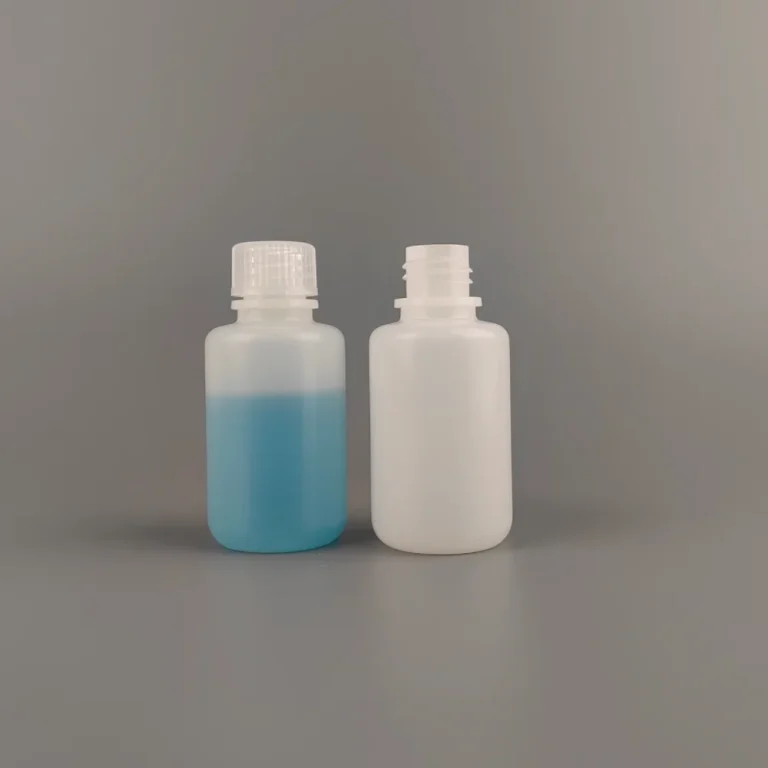
If an organic solvent slowly softens the inner wall of a sample bottle, the failure is rarely immediate. The cap still closes. The liquid looks stable. But within days, extractables increase, sealing performance drops, and the sample composition shifts. In regulated environments, that means invalid data—and sometimes a full batch re-run.
After 15 years working with laboratory plasticware at JSBIO, one pattern is consistent: chemical compatibility issues are not caused by extreme conditions—they happen under routine use when material selection is slightly off.
Technical Insights: What “Chemical Compatibility” Actually Means
Chemical compatibility is not a binary “resistant or not.” It is a combination of:
- Material stability (PP vs HDPE)
- Temperature exposure (-80°C to 121°C)
- Contact time (minutes vs weeks)
- Mechanical stress (centrifugation, pressure)
- Sealing system behavior (leak-proof design + gasket interaction)
A container that performs well at room temperature may fail under autoclaving or long-term solvent exposure.
Core Materials Used in Lab Containers
Polypropylene (PP)
Typical parameters:
- Temperature range: -80°C to 121°C
- Max RCF: up to 15,000–20,000 × g
- Wall Thickness: high precision, uniform distribution
- Sealing: multi-thread + leak-proof gasket
Compatibility profile:
- Strong resistance to aqueous solutions
- Stable with weak acids and bases
- Limited resistance to strong organic solvents (e.g., aromatic hydrocarbons)
High-Density Polyethylene (HDPE)
Typical parameters:
- Temperature range: -50°C to 110°C
- Max RCF: low (not designed for high-speed centrifugation)
- Wall Thickness: moderate consistency
- Sealing: standard threaded cap
Compatibility profile:
- Excellent resistance to acids and bases
- Better tolerance to some organic chemicals than PP
- Not suitable for high-temperature sterilization cycles
Chemical Compatibility by Substance Type
1. Aqueous Solutions
- PP: Stable
- HDPE: Stable
No significant degradation expected under standard lab conditions.
2. Acids and Bases
- PP: Good resistance (except strong oxidizing acids)
- HDPE: Very high resistance
HDPE is often preferred for long-term acid storage.
3. Organic Solvents
- PP: Limited compatibility (depends on solvent type)
- HDPE: Better performance with non-polar solvents
Risk factors:
- Swelling of container walls
- Reduced sealing integrity
- Increased extractables
4. Alcohols and Buffers
- PP: Stable
- HDPE: Stable
Widely used in molecular biology and routine lab workflows.
Role of Wall Thickness in Chemical Resistance
Wall thickness is not just a mechanical parameter.
In practice:
- Thin walls → faster permeation and degradation
- Uneven thickness → localized stress + chemical attack points
JSBIO design approach:
- Controlled Wall Thickness uniformity
- Reinforced stress zones (base and thread area)
This improves both chemical resistance and structural reliability.
Leak-Proof Design and Chemical Exposure
Sealing systems are often overlooked in compatibility discussions.
Key factors:
- Gasket material compatibility with chemicals
- Thread precision under thermal expansion
- Long-term sealing under solvent vapor exposure
JSBIO sealing structure:
- Multi-thread closure
- Integrated leak-proof gasket design
- Torque-controlled sealing
Observed effect:
- Reduced evaporation
- Lower contamination risk
- Stable sealing after repeated use
Temperature and Chemical Interaction
Temperature changes chemical behavior.
At higher temperatures (e.g., 121°C autoclaving):
- Reaction rates increase
- Material softening may occur
- Sealing pressure changes
At ultra-low temperatures (-80°C):
- Material becomes less flexible
- Stress concentration increases
PP maintains performance across this range. HDPE shows limitations at both extremes.
Technical Specifications Comparison
| Parameter | Polypropylene (PP) | HDPE |
| Temperature Range | -80°C to 121°C | -50°C to 110°C |
| Autoclavable | Yes | Limited |
| Max RCF | Up to 20,000 × g | Low |
| Chemical Resistance | High (general) | Very High (especially acids) |
| Organic Solvent Resistance | Moderate | Better (varies) |
| Wall Thickness Control | High precision | Medium |
| Leak-proof Design | Advanced (gasket + thread) | Standard |
| Structural Stability | High | Moderate |
Lab Tips: How to Select the Right Container
✔ Identify the chemical type (aqueous, acid, solvent)
✔ Check temperature exposure (-80°C storage or 121°C sterilization)
✔ Verify required Max RCF (centrifuge use)
✔ Evaluate wall thickness consistency
✔ Confirm gasket compatibility with chemicals
✔ Avoid long-term storage in marginally compatible materials
Common Failure Patterns in Labs
- Using PP with aggressive organic solvents
- Ignoring gasket material compatibility
- Reusing containers after chemical exposure
- Combining high temperature + solvent exposure
- Selecting containers without verified wall thickness control
These failures are gradual, not immediate.
From a Supplier’s Perspective
In OEM projects, chemical compatibility is rarely solved by switching material alone.
We typically adjust:
- Material grade (PP vs HDPE variants)
- Wall thickness distribution
- Gasket composition
- Thread design for sealing stability
Two containers labeled “PP” can behave differently depending on these variables.
Practical Selection Checklist
Before finalizing container selection:
✔ Is the material (PP/HDPE) matched to the chemical type?
✔ Does the container support -80°C to 121°C if required?
✔ Is Max RCF suitable for centrifugation use?
✔ Is wall thickness uniform and documented?
✔ Does the design include a leak-proof gasket?
✔ Has compatibility been tested for long-term exposure?
CTA (For Procurement Decision)
If you are evaluating chemical compatibility for lab containers:
A. Request free samples for validation
→ Test real chemical exposure, temperature cycles, and sealing performance
B. Get a bulk quote and customization details
→ Define material, wall thickness, and sealing design based on your application
If you can share your specific chemicals, temperatures, and usage cycle, I can map them directly to material and container specifications.