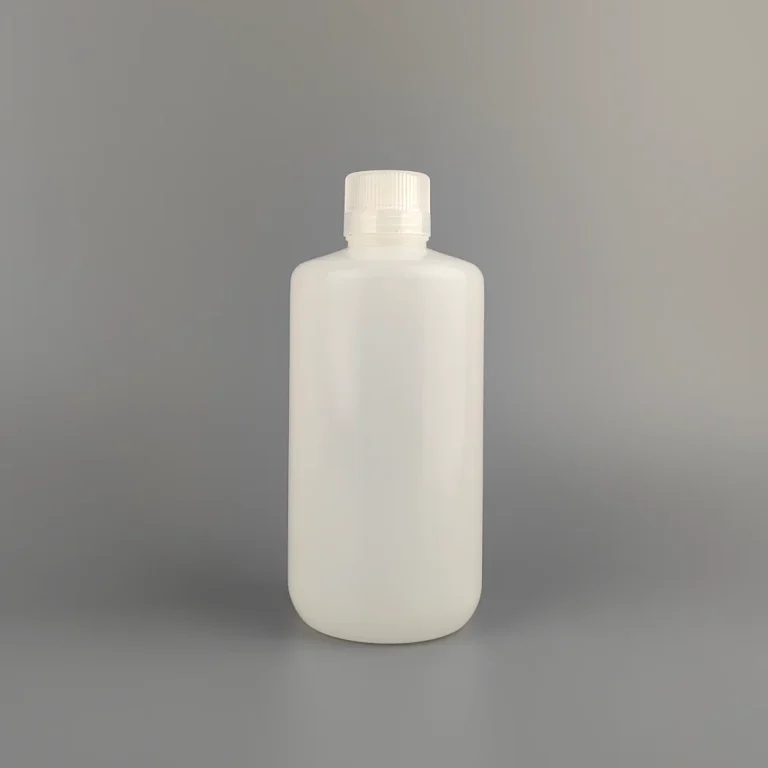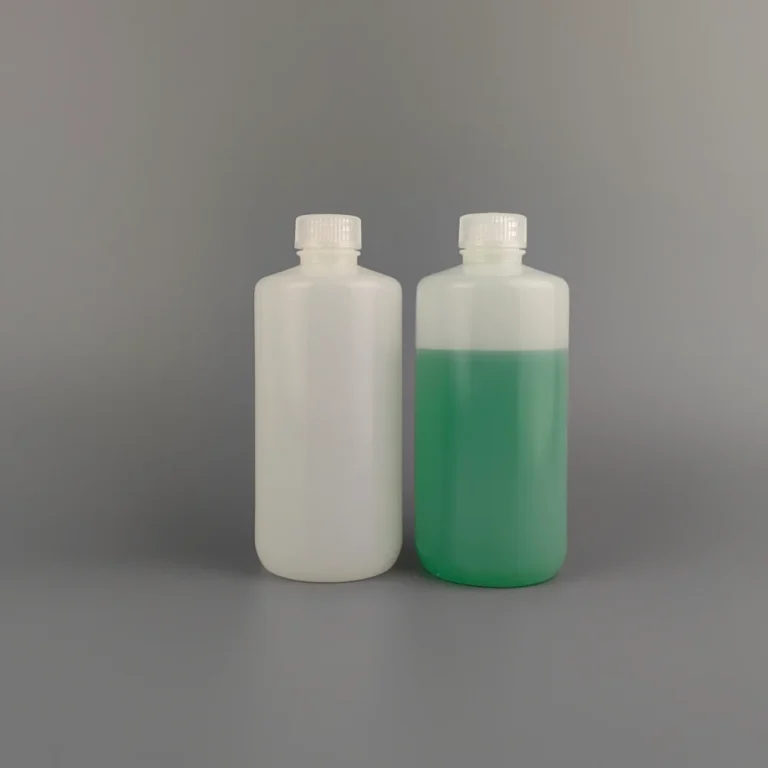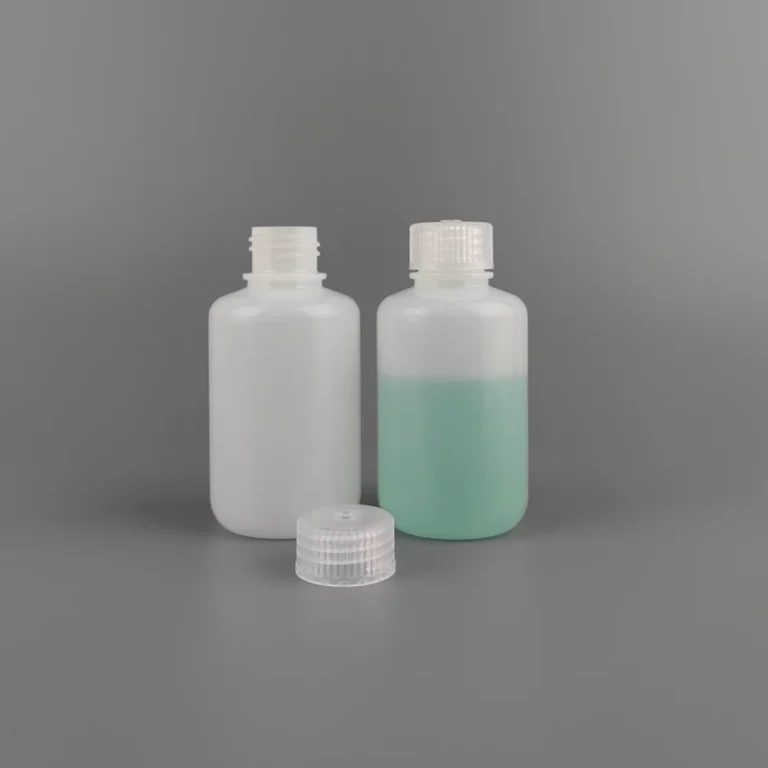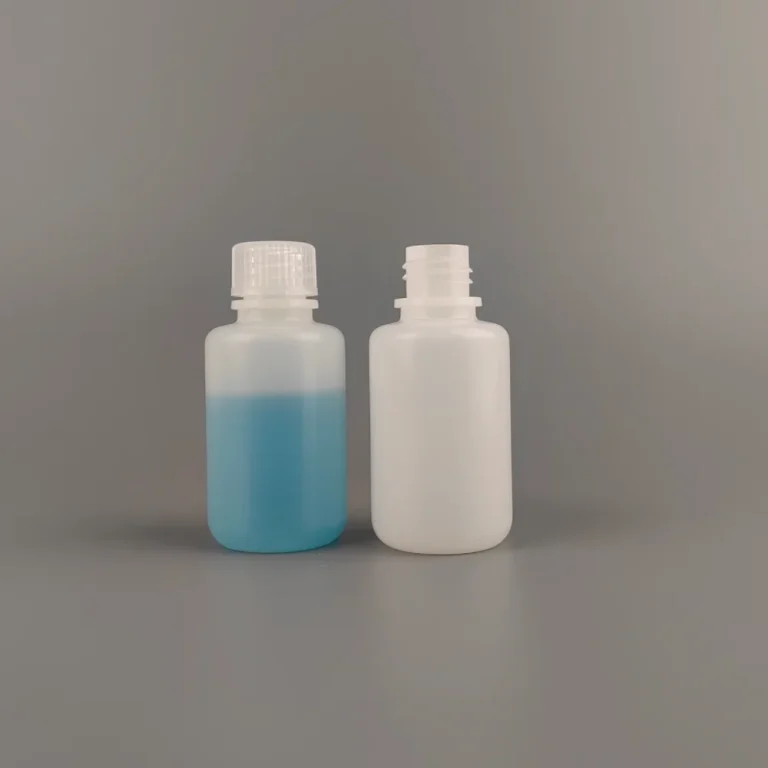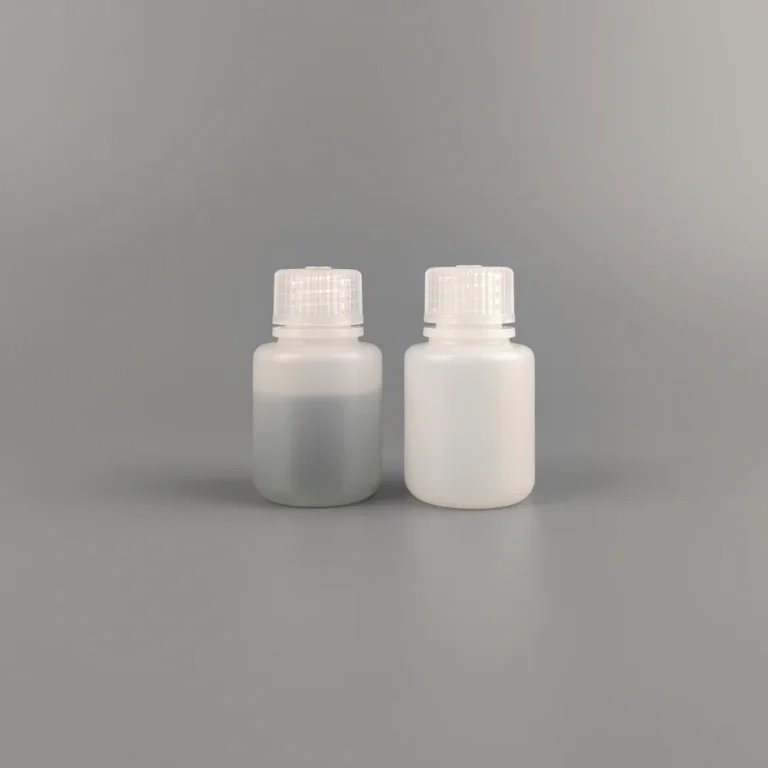
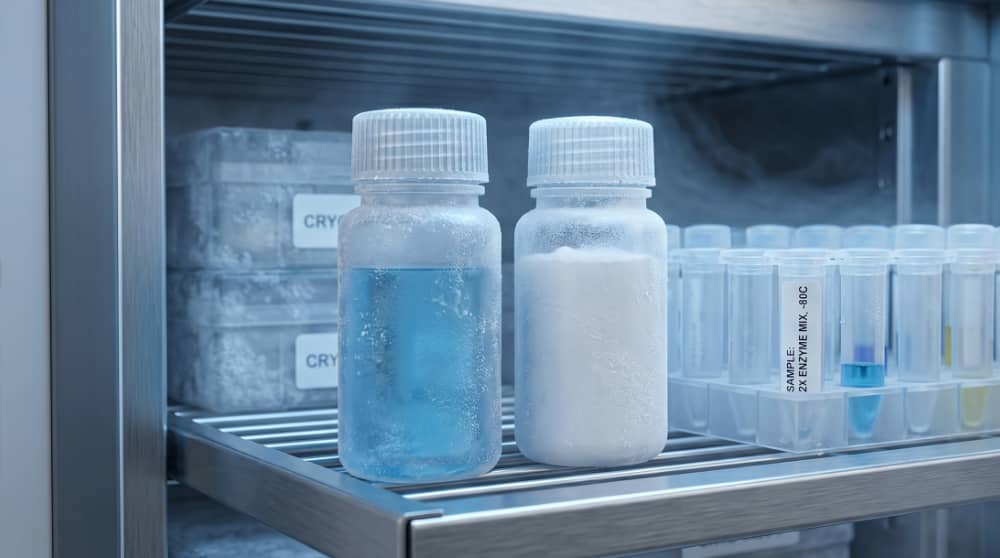
If a sample passes initial testing but fails after storage, the container is often the hidden variable. A tube that performs well at room temperature may crack at -80°C. A bottle that resists chemicals may fail during autoclaving due to seal deformation. These are not isolated issues—they result from incorrect material selection under real lab conditions.
From 15 years at JSBIO, selecting the right container material is a balance between chemical compatibility, temperature range (-80°C to 121°C), wall thickness control, sealing design, and mechanical performance (Max RCF).
Technical Insights: What Drives Material Selection
Laboratory containers must handle multiple stresses:
- Chemical exposure (acids, bases, solvents)
- Temperature cycling (freezing, heating, autoclaving)
- Mechanical stress (centrifugation, transport)
- Permeation control (gas and vapor)
- Contamination risk (sealing integrity)
No single material performs best in all scenarios.
Core Materials Used in Laboratory Containers
Polypropylene (PP)
Typical parameters:
- Temperature Range: -80°C to 121°C
- Max RCF: up to 15,000–20,000 × g
- Wall Thickness: high precision, uniform
- Sealing: multi-thread + leak-proof gasket
Performance:
- Suitable for biological samples (DNA, RNA, proteins)
- Autoclavable
- Stable under centrifugation
- Low adsorption characteristics
High-Density Polyethylene (HDPE)
Typical parameters:
- Temperature Range: -50°C to 110°C
- Max RCF: low
- Wall Thickness: moderate
- Sealing: threaded cap, optional gasket
Performance:
- High resistance to acids and bases
- Suitable for chemical storage
- Good impact resistance
- Limited for high-temperature sterilization
Low-Density Polyethylene (LDPE)
Typical parameters:
- Temperature Range: -50°C to 80–90°C
- Max RCF: not suitable
- Wall Thickness: flexible
- Sealing: simple cap or dispensing design
Performance:
- Flexible and squeezable
- Suitable for wash bottles
- Higher permeability
- Not suitable for long-term storage
PET (Polyethylene Terephthalate)
Typical parameters:
- Temperature Range: 0°C to 60–70°C
- Max RCF: not suitable
- Wall Thickness: thin, clarity-focused
- Sealing: standard threaded cap
Performance:
- High transparency
- Suitable for visual inspection
- Limited chemical and temperature resistance
Glass
Typical parameters:
- Temperature Range: wide
- Max RCF: limited
- Wall Thickness: rigid
- Sealing: cap + liner
Performance:
- Near-zero permeability
- High chemical resistance
- Fragile under mechanical stress
Matching Materials to Applications
Biological Samples (DNA, RNA, Proteins)
Requirements:
- Low adsorption
- Temperature tolerance (-20°C to -80°C)
- Centrifugation compatibility
Recommended: PP
Chemical Storage
Requirements:
- High chemical resistance
- Low permeability
- Structural durability
Recommended: HDPE (for acids/bases), PP (for broader workflows)
Dispensing Applications
Requirements:
- Flexibility
- Ease of use
Recommended: LDPE
Visual Inspection Applications
Requirements:
- Transparency
Recommended: PET or glass
High-Temperature Sterilization
Requirements:
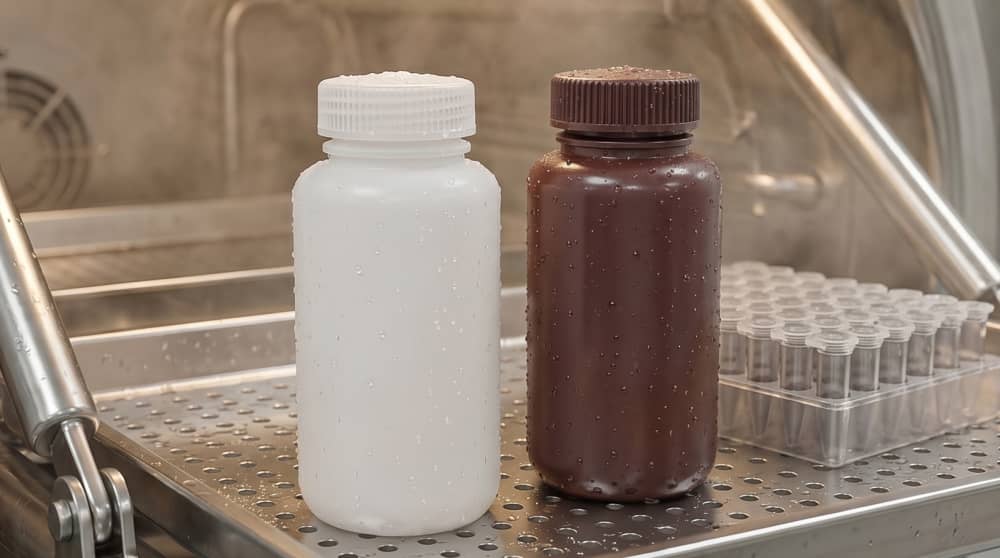
- Autoclavable (121°C)
- Structural stability
Recommended: PP or glass
Role of Wall Thickness in Material Performance
Wall thickness affects:
- Mechanical strength
- Thermal resistance
- Permeation rate
Failure patterns:
- Thin or uneven walls → cracking or deformation
- Stress concentration → reduced durability
JSBIO control:
- Uniform wall thickness distribution
- Reinforced high-stress zones
Sealing Design and Contamination Control
Sealing is critical regardless of material.
Key features:
- Thread precision
- Gasket compatibility
- Torque stability
JSBIO sealing system:
- Multi-thread closure
- Integrated leak-proof gasket design
Impact:
- Reduced leakage
- Stable storage conditions
- Lower contamination risk
Temperature Compatibility Overview
- PP: -80°C to 121°C
- HDPE: -50°C to 110°C
- LDPE: -50°C to 80–90°C
- PET: up to ~70°C
- Glass: wide range
Material must match the full workflow, not just storage.
Mechanical Performance and Centrifugation (Max RCF)
- PP: up to 15,000–20,000 × g
- HDPE: low
- LDPE/PET: not suitable
- Glass: limited
For centrifugation workflows, PP is typically required.
Technical Specifications Comparison
| Parameter | PP | HDPE | LDPE | PET | Glass |
| Temperature Range | -80°C to 121°C | -50°C to 110°C | -50°C to 90°C | 0°C to 70°C | Wide |
| Autoclavable | Yes | Limited | No | No | Yes |
| Max RCF | Up to 20,000 × g | Low | Not suitable | Not suitable | Low |
| Chemical Resistance | High | Very High | Moderate | Moderate | Very High |
| Permeability | Low | Low | High | Low | None |
| Wall Thickness Control | High precision | Medium | Flexible | Thin | Rigid |
| Leak-proof Design | Advanced | Optional | Basic | Basic | Cap + liner |
| Impact Resistance | High | High | Moderate | Moderate | Low |
Lab Tips: How to Select the Right Material
✔ Define sample type (biological vs chemical)
✔ Confirm temperature requirements (-80°C to 121°C)
✔ Evaluate chemical compatibility
✔ Check centrifugation needs (Max RCF)
✔ Verify wall thickness consistency
✔ Ensure leak-proof sealing design
Common Mistakes in Material Selection
- Using HDPE in autoclave workflows
- Using LDPE for long-term storage
- Choosing PET for chemical exposure
- Ignoring permeability requirements
- Selecting based only on cost
These issues typically appear after repeated use or extended storage.
From a Supplier’s Perspective
Material selection is only the starting point.
In OEM projects, we optimize:
- Material grade (PP, HDPE variants)
- Wall thickness distribution
- Sealing system (gasket + thread)
- Structural design for required Max RCF
Two containers made from the same material can perform differently depending on these design factors.
Practical Selection Checklist
Before selecting a laboratory container:
✔ Is the material compatible with the sample?
✔ Does it support the required temperature range?
✔ Is centrifugation involved (check Max RCF)?
✔ Is wall thickness uniform and controlled?
✔ Does it include a leak-proof gasket?
✔ Is long-term storage performance validated?
CTA (For Procurement Decision)
If you are selecting materials for laboratory containers:
A. Request free samples for validation
→ Test temperature, chemical exposure, and sealing performance
B. Get a bulk quote and customization details
→ Optimize material, wall thickness, and sealing design for your workflow
If you can share your application scenario (sample type, temperature range, handling process), I can recommend the exact material and container configuration.