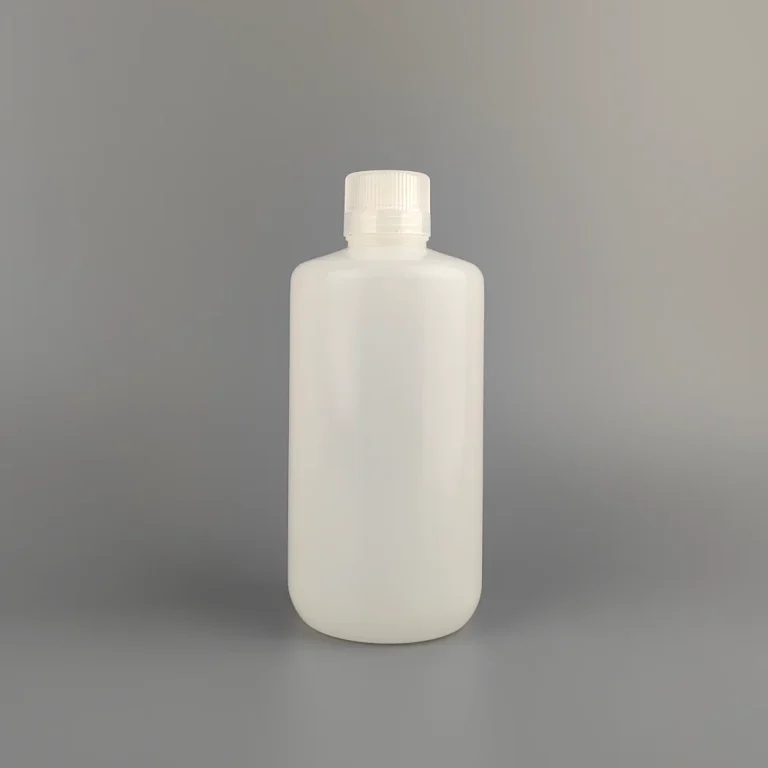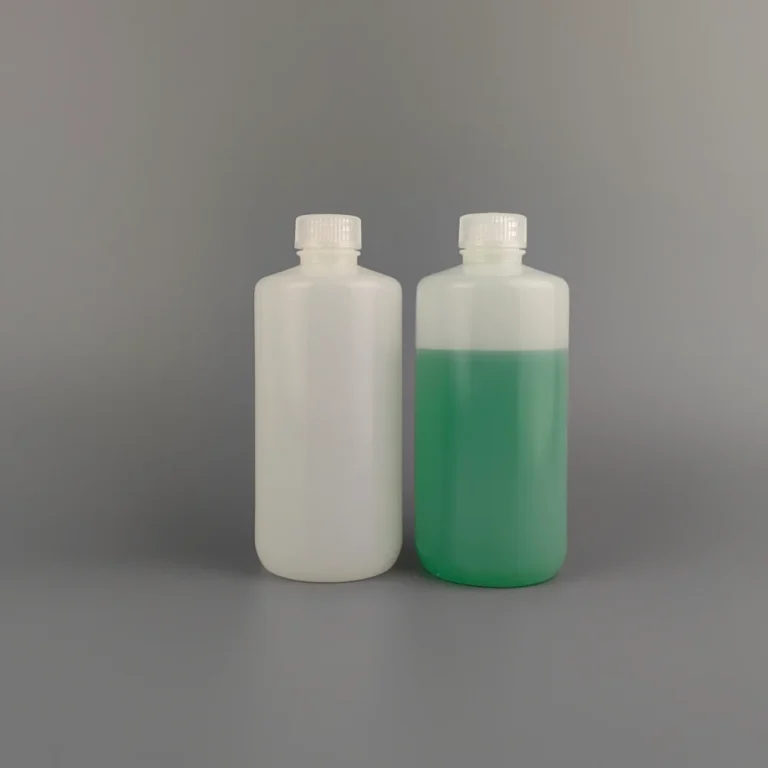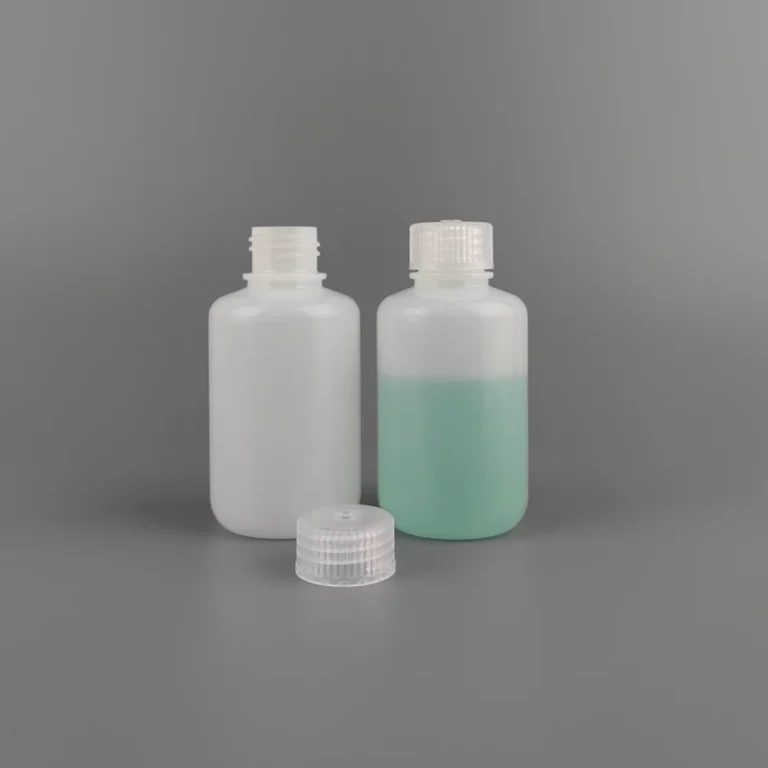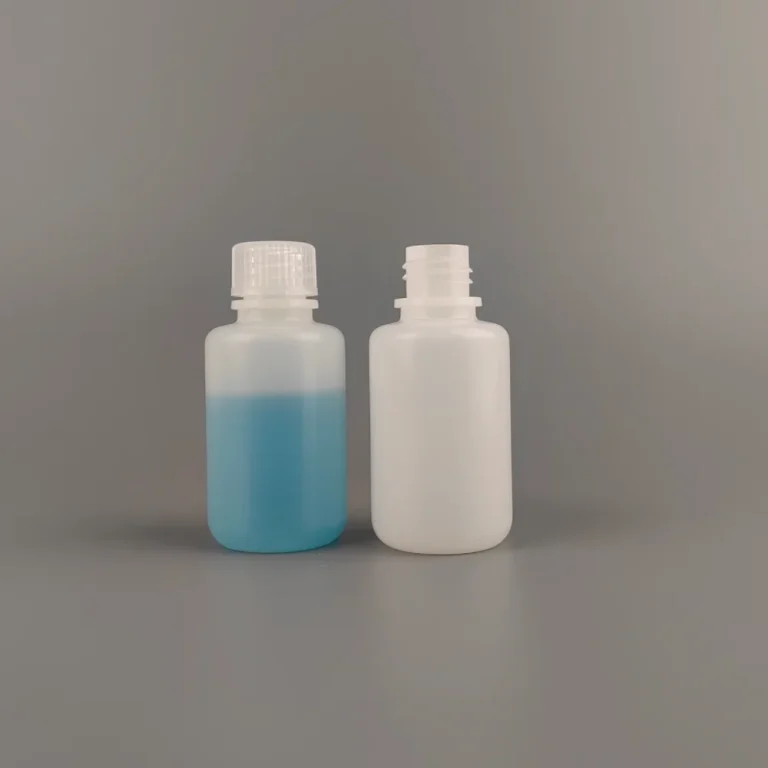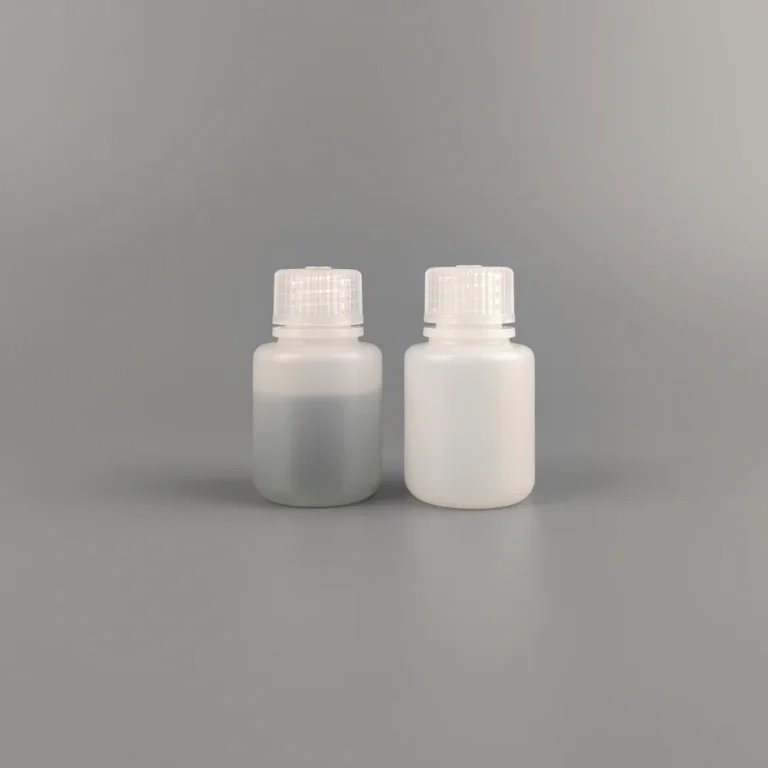
If a container shatters during cold-room handling, the loss is immediate. If a plastic bottle slowly allows vapor transmission, the loss is gradual—and often harder to detect. In pharmaceutical and biotech labs, both failure modes show up in stability data, not at the moment of handling.
From 15 years at JSBIO, choosing between glass and plastic is not about preference. It is about matching material behavior to temperature (-80°C to 121°C), chemical exposure, sealing design, wall thickness control, and mechanical stress (Max RCF).
Technical Insights: What Actually Differentiates Glass and Plastic
Key evaluation factors:
- Temperature tolerance (freezing, autoclaving)
- Chemical inertness vs compatibility
- Mechanical strength and breakage risk
- Permeability (gas/moisture)
- Sealing system performance
- Process compatibility (centrifugation, transport)
Plastic containers (PP/HDPE) and glass respond differently under each of these.
Glass Containers: Performance Profile
Typical characteristics:
- Temperature Range: wide (cryogenic to >121°C, depending on glass type)
- Max RCF: limited; breakage risk increases under high g-force
- Wall Thickness: rigid, but not flexible
- Sealing: external cap + liner (depends on design)
Behavior in Lab Use:
- Chemically inert for most substances
- Zero permeability (no vapor transmission)
- High temperature resistance
- Transparent (easy visual inspection)
Limitations:
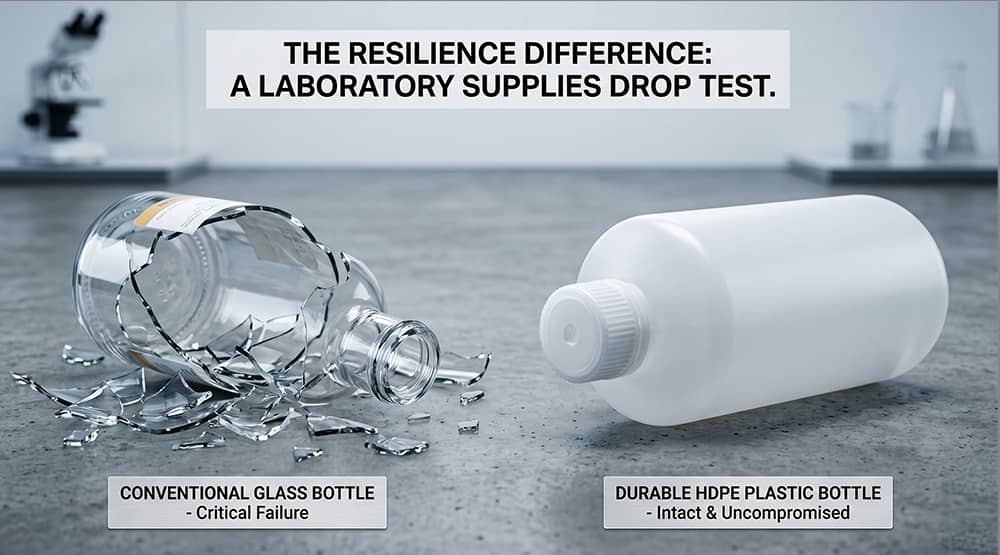
- Brittle → breakage under impact or thermal shock
- Heavier → higher transport risk
- Not suitable for high-speed centrifugation in many cases
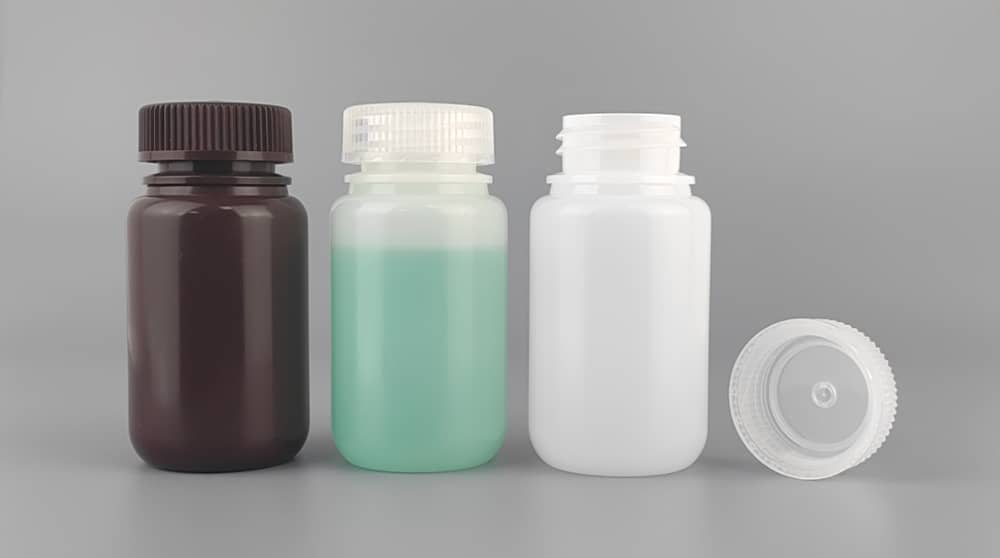
Plastic Containers (PP / HDPE): Performance Profile
Polypropylene (PP)
- Temperature Range: -80°C to 121°C
- Max RCF: up to 15,000–20,000 × g
- Wall Thickness: controlled, uniform
- Sealing: multi-thread + leak-proof gasket
High-Density Polyethylene (HDPE)
- Temperature Range: -50°C to 110°C
- Max RCF: low
- Wall Thickness: moderate
- Sealing: threaded cap, optional gasket
Behavior in Lab Use:
- Lightweight and impact-resistant
- Flexible under stress (reduces breakage)
- Tunable sealing systems (leak-proof design)
- Compatible with centrifugation (PP)
Limitations:
- Some permeability (varies by material)
- Chemical compatibility depends on substance
- Lower rigidity compared to glass
Temperature Performance Comparison
Low Temperature (-80°C)
- Glass: stable but prone to thermal shock
- PP: stable with proper wall thickness design
- HDPE: limited at extreme low temperature
High Temperature (121°C Autoclaving)
- Glass: stable
- PP: stable (autoclavable)
- HDPE: limited
PP offers the most balanced performance across full lab temperature range.
Chemical Compatibility
Glass:
- Near-universal chemical resistance
- No interaction with most solvents, acids, or bases
Plastic:
- PP: good general resistance, limited with strong solvents
- HDPE: excellent for acids/bases, moderate for solvents
In practice:
- Glass is used for aggressive chemicals
- Plastics are used for routine lab workflows
Permeability Differences
- Glass: zero permeability
- PP: low permeability
- HDPE: moderate permeability
Impact:
- Glass is preferred for long-term storage of volatile substances
- Plastic is acceptable for most short- to mid-term lab use
Role of Wall Thickness
Wall thickness affects:
- Structural integrity
- Thermal stress resistance
- Permeation (for plastics)
Glass:
- Thick but rigid → cannot absorb stress
- Failure mode: sudden break
Plastic:
- Controlled wall thickness improves durability
- Can absorb mechanical and thermal stress
JSBIO approach:
- Uniform wall thickness distribution
- Reinforced stress zones in PP containers
Sealing and Leak-Proof Design
Sealing is often more advanced in plastic containers.
Glass:
- External cap + liner
- Seal depends on liner material and torque
Plastic (PP/HDPE):
- Multi-thread closure
- Integrated leak-proof gasket design
- Torque-controlled sealing
Observed performance:
- Better resistance to leakage during transport
- Stable sealing after temperature cycling
Mechanical Performance and Centrifugation (Max RCF)
Glass:
- Not suitable for high-speed centrifugation
- Risk of breakage under high g-force
Plastic:
- PP: up to 15,000–20,000 × g
- HDPE: low
For workflows involving centrifugation, PP is typically required.
Technical Specifications Comparison
| Parameter | Glass | Polypropylene (PP) | HDPE |
| Temperature Range | Very wide | -80°C to 121°C | -50°C to 110°C |
| Autoclavable | Yes | Yes | Limited |
| Max RCF | Low | Up to 20,000 × g | Low |
| Chemical Resistance | Very High | High | Very High |
| Permeability | None | Low | Moderate |
| Wall Thickness Behavior | Rigid | Controlled, uniform | Moderate |
| Leak-proof Design | Cap + liner | Advanced (gasket + thread) | Optional |
| Impact Resistance | Low | High | High |
| Weight | High | Low | Low |
Lab Tips: When to Choose Glass vs Plastic
Choose Glass when:
✔ Working with aggressive chemicals or solvents
✔ Zero permeability is required
✔ Long-term storage of volatile substances
✔ High-temperature processes without mechanical stress
Choose Plastic (PP / HDPE) when:
✔ Centrifugation is required (PP)
✔ Handling and transport safety are important
✔ Lightweight containers are preferred
✔ Leak-proof sealing is critical
✔ Routine lab workflows with moderate chemical exposure
Common Mistakes in Selection
- Using glass in high-impact environments → breakage
- Using plastic for aggressive solvents → degradation
- Ignoring permeability for long-term storage
- Selecting based only on transparency
- Overlooking sealing system performance
These issues often appear during extended use or transport.
From a Supplier’s Perspective
Material choice is only one part of performance.
In OEM projects, we adjust:
- Wall thickness for durability and permeability control
- Sealing system (gasket + thread vs liner)
- Material grade based on chemical exposure
- Structural design for target Max RCF
Two containers labeled “PP” or “glass-compatible” can perform differently depending on these factors.
Practical Selection Checklist
Before selecting glass or plastic:
✔ Is chemical compatibility fully verified?
✔ Is temperature range (-80°C to 121°C) required?
✔ Is centrifugation involved (check Max RCF)?
✔ Is permeability a concern?
✔ Is impact resistance important?
✔ Does the container include a reliable leak-proof sealing system?
CTA (For Procurement Decision)
If you are choosing between glass and plastic laboratory containers:
A. Request free samples for validation
→ Test chemical exposure, sealing, and temperature performance
B. Get a bulk quote and customization details
→ Optimize material, wall thickness, and sealing design for your application
If you can share your application (chemical type, storage duration, temperature, handling conditions), I can help define the exact container material and structure.