If a DNA sample shows reduced yield after storage, the issue is often traced back to adsorption on container walls rather than extraction efficiency. In other cases, protein activity drops after freeze–thaw cycles because the container surface interacts with the sample or the seal allows micro-contamination. These are not rare events—they are material-driven failures.
From 15 years at JSBIO, the question is not “which material is best,” but which material performs correctly under specific biological conditions.
Technical Insights: Material Selection Depends on Sample Type
Biological samples are sensitive to:
- Surface interaction (adsorption)
- Temperature cycles (-80°C to 121°C)
- Contamination risk (sealing integrity)
- Mechanical stress (centrifugation, handling)
The most commonly used materials:
- Polypropylene (PP)
- High-Density Polyethylene (HDPE)
Each has different performance profiles.
Performance of Polypropylene (PP)
Typical technical parameters:
- Temperature Range: -80°C to 121°C
- Max RCF: up to 15,000–20,000 × g
- Wall Thickness: high precision, uniform
- Sealing: multi-thread + leak-proof gasket
Behavior with Biological Samples:
- Low adsorption for DNA, RNA, proteins
- Stable under freeze–thaw cycles
- Compatible with autoclaving
- Maintains structure under centrifugation
PP is widely used in molecular biology workflows because it minimizes sample loss.
Performance of HDPE
Typical technical parameters:
- Temperature Range: -50°C to 110°C
- Max RCF: low (not suitable for high-speed centrifugation)
- Wall Thickness: moderate consistency
- Sealing: standard threaded cap
Behavior with Biological Samples:
- Good chemical resistance
- Suitable for bulk storage (buffers, reagents)
- Higher adsorption risk compared to PP
- Limited performance in ultra-low temperature conditions
HDPE is often used for storage, not for precision sample handling.
Material Selection by Sample Type
DNA and RNA Samples
Requirements:
- Low adsorption
- RNase/DNase-free environment
- Stability at -20°C to -80°C
Recommended material: PP
Reason:
- Reduced binding to container surface
- Compatible with low temperatures
- Supports centrifugation steps
Protein Samples
Requirements:
- Minimal surface interaction
- Stable during freeze–thaw
- Chemical compatibility with buffers
Recommended material: PP (low-binding variants preferred)
Risk with incorrect material:
- Protein adsorption → reduced concentration
- Structural changes
Cell Culture Samples
Requirements:
- Sterility
- Biocompatibility
- Cryogenic tolerance
Recommended material: PP (for storage) / specialized materials (for growth)
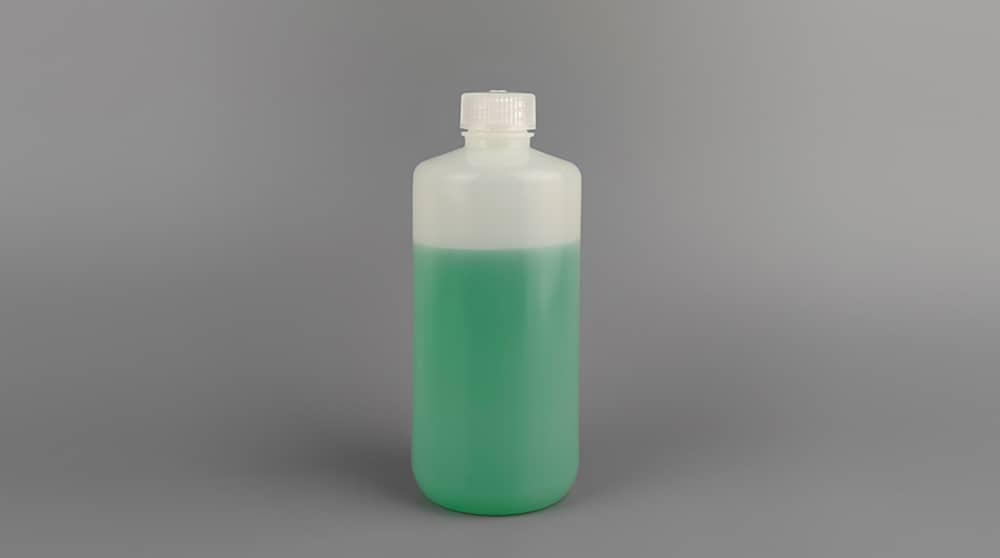
Reagents and Buffers
Requirements:
- Chemical resistance
- Long-term storage stability
Recommended material: HDPE or PP
Selection depends on:
- Chemical composition
- Storage temperature
Role of Wall Thickness in Biological Sample Protection
Wall thickness affects:
- Thermal stress resistance
- Mechanical durability
- Permeation rate
Failure patterns:
- Thin or uneven walls → cracking at -80°C
- Stress concentration → micro-fractures
JSBIO approach:
- Controlled wall thickness uniformity
- Reinforced base and thread areas
This improves both durability and sample protection.
Leak-Proof Design and Contamination Control
Biological samples are highly sensitive to contamination.
Critical design elements:
- Leak-proof gasket system
- Precision thread engagement
- Stable sealing after temperature cycles
Observed impact:
- Prevents external contamination
- Reduces evaporation
- Maintains internal sample conditions
Temperature Compatibility and Sample Stability
Material must match storage conditions:
- PP: -80°C to 121°C
- HDPE: -50°C to 110°C
For workflows involving:
- Freezing
- Thawing
- Autoclaving
PP provides a wider usable range.
Centrifugation Requirements (Max RCF)
Many biological workflows require centrifugation.
Typical parameters:
- PP containers: up to 15,000 × g
- HDPE containers: not suitable for high RCF
Incorrect material selection may lead to:
- Deformation
- Leakage
- Sample loss
Technical Specifications Comparison
| Parameter | Polypropylene (PP) | HDPE |
| Temperature Range | -80°C to 121°C | -50°C to 110°C |
| Autoclavable | Yes | Limited |
| Max RCF | Up to 20,000 × g | Low |
| Adsorption (DNA/Protein) | Low | Moderate |
| Chemical Resistance | High | Very High |
| Wall Thickness Control | High precision | Medium |
| Leak-proof Design | Advanced (gasket + thread) | Standard |
| Suitability for Bio Samples | High | Moderate |
Lab Tips: How to Choose the Right Material
✔ Identify sample type (DNA, RNA, protein, cells)
✔ Check required temperature range (-80°C to 121°C)
✔ Confirm centrifugation needs (Max RCF)
✔ Evaluate adsorption risk
✔ Verify wall thickness consistency
✔ Ensure leak-proof sealing design
Common Mistakes in Material Selection
- Using HDPE for DNA/RNA storage → adsorption loss
- Ignoring centrifugation requirements
- Selecting based on cost only
- Using non-sterile containers for sensitive samples
- Overlooking sealing performance
These issues often appear after repeated use.
From a Supplier’s Perspective
Material selection is only one variable.
In OEM projects, we typically optimize:
- PP grade for low adsorption
- Wall thickness distribution
- Sealing system (gasket + thread)
- Structural design for target Max RCF
Two containers made of “PP” can perform differently depending on these factors.
Practical Selection Checklist
Before selecting a container:
✔ Is PP or HDPE matched to your sample type?
✔ Does it support -80°C to 121°C if required?
✔ Is Max RCF suitable for your workflow?
✔ Is wall thickness uniform and controlled?
✔ Does it include a leak-proof gasket?
✔ Has adsorption performance been validated?
CTA (For Procurement Decision)
If you are selecting materials for biological sample containers:
A. Request free samples for validation
→ Test adsorption, sealing, and temperature performance in your workflow
B. Get a bulk quote and customization details
→ Define material grade, wall thickness, and sealing design based on your application
If you can share your sample type and workflow (e.g., DNA extraction → centrifugation → -80°C storage), I can translate that into specific material and container specifications.