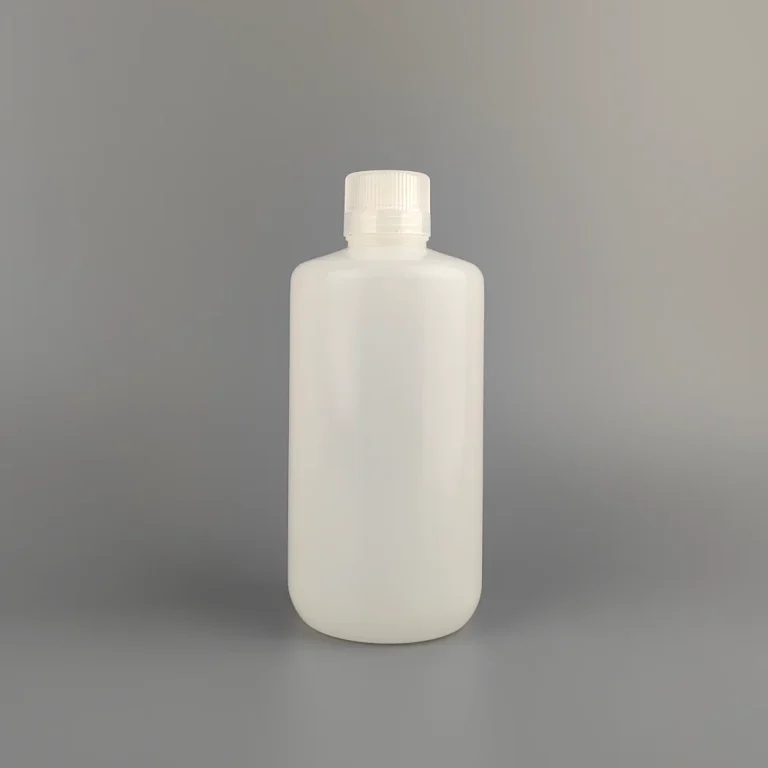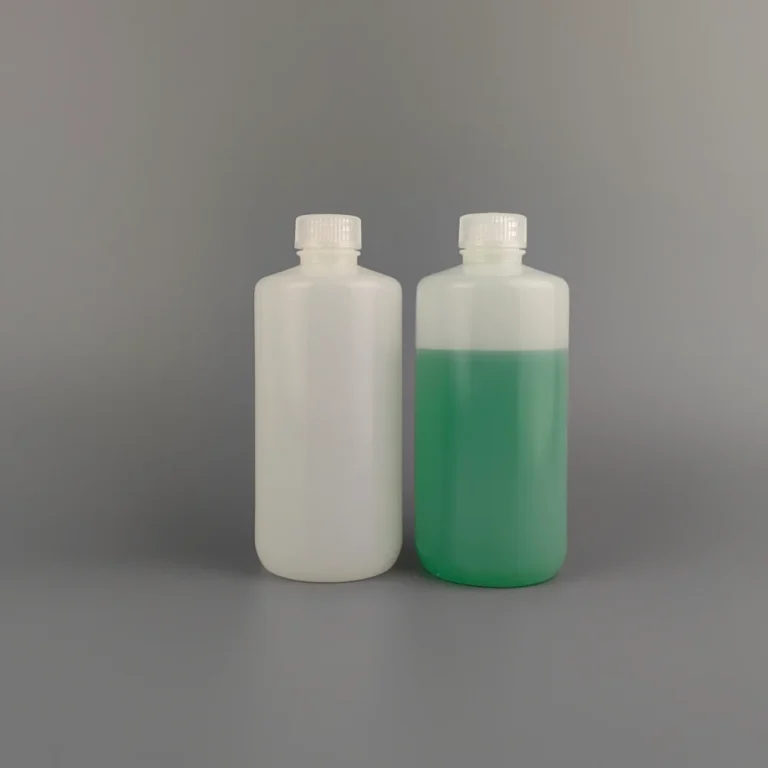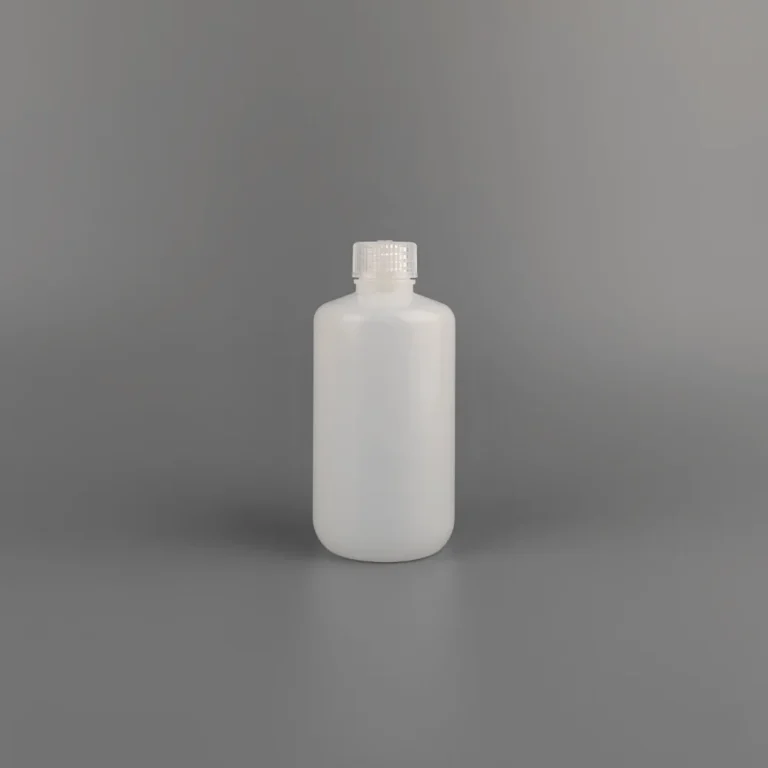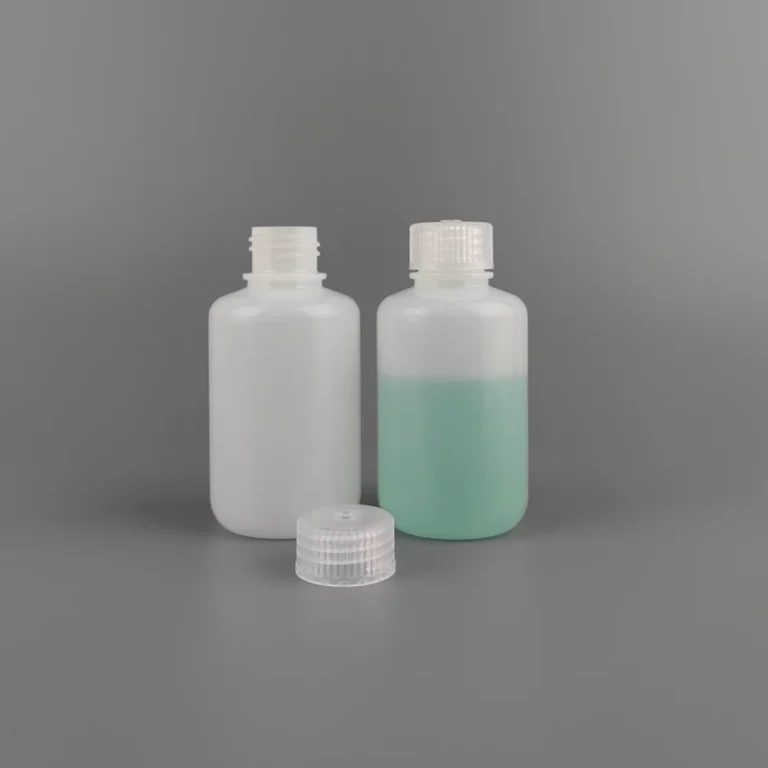
When sourcing storage solutions for critical fluids, procurement managers and distributors often face a common question: Should we buy sterile or non-sterile containers? While medical and clinical fields mandate certified sterile packaging, the criteria shift drastically when dealing with high-purity industrial sectors, particularly semiconductor manufacturing, wet chemical processing, and precision laboratory research. In these micro-contamination-controlled environments, biological sterility is rarely the limiting factor. Instead, chemical purity, material inertness, trace-element control, and robust sealing security take precedence.
This comprehensive guide explores the core differences between sterile and non-sterile containers, why non-sterile but ultra-clean plastic bottles are preferred for semiconductor chemicals, and how to select the optimal material for your supply chain.
1.What is the True Difference Between Sterile and Non-Sterile Containers?
To make an informed B2B bulk purchase, it is vital to understand what these terms actually mean under industrial manufacturing standards:
- Sterile Containers: These containers undergo post-production treatment—typically via Gamma Irradiation or Ethylene Oxide (EO) gas—to eliminate microbial life. They are regulated and certified to be free of viable microorganisms, DNase, RNase, and pyrogens.
- Non-Sterile But Ultra-Clean Containers: These containers are molded at high temperatures (often exceeding 200°C) inside controlled cleanroom environments. While they do not undergo post-molding irradiation to kill biological microbes, they are physically pristine, particulate-controlled, and chemically pure.
Important Compliance Regulatory Note: The plastic laboratory containers and reagent bottles discussed in this article are engineered strictly for laboratory research, industrial chemical packaging, and semiconductor electronic chemical storage. These products are not registered or certified for clinical, medical, or in-vivo diagnostic applications.
2.Why Semiconductor Reagents Demand Ultra-Clean Non-Sterile Bottles Over Medical Sterile Variants
In the semiconductor fab, sub-micron particles and trace metal ions (such as Sodium, Iron, or Copper) are the critical enemies of yield rates. Biological microbes can rarely survive in the harsh lithography chemicals, ultra-pure acids, or stripping solvents used in wafer fabrication. Therefore, medical-grade sterility adds no value to a wafer production line.
Instead, semiconductor chemical packaging relies heavily on premium, non-sterile but ultra-clean high-purity reagent bottles for several critical reasons:
The Critical Need for Amber HDPE Light-Blocking Bottles
Many electronic chemicals, such as photoresists, developers, and specialty solvents, are highly light-sensitive (photochemically unstable). Exposure to ambient UV or visible light triggers premature degradation or chemical cross-linking.
To solve this, bulk chemical manufacturers utilize Amber HDPE Bottles. Advanced amber high-density polyethylene features exceptional UV-blocking and light-shielding properties, protecting the chemical integrity of light-sensitive compounds from the packaging facility to the point of use in the fab.
3.The Power of Linerless Triple-Seal Technology: Minimating Contamination Risks
Traditional cap designs often utilize a separate liner or wad (such as silicone or foam) inside the cap to achieve a seal. However, in laboratory analysis and semiconductor wet-processing, lined caps present a known operational risk:
1. Liner Degradation: Corrosive acids and solvents can attack and degrade the liner adhesive or the liner material itself.
2. Particulate Generation: As the cap is twisted on and off, friction can shred the liner, dropping micro-particles into the high-purity liquid.
Our Leakproof Advantage: Integrated Mold-In Sealing Ring
To address this failure point, our professional-grade plastic reagent bottle lines utilize an integrated linerless triple-seal form factor.
The inside of the rigid closure features a molded-in plastic triangle ridge. When screwed down, this ridge compresses against the inner beveled neck of the plastic bottle, creating a reliable, continuous hermetic seal. By eliminating cap liners entirely, our design achieves excellent leakproof security and virtually eliminates liner-induced particulate contamination during international bulk shipping.
4.Chemical Compatibility Guide: Selecting PP vs. HDPE
As a leading B2B exporter, we specialize strictly in high-performance polymer solutions. Our high-purity product lines are manufactured exclusively from Polypropylene (PP) and High-Density Polyethylene (HDPE). We do not offer glass containers, as glass can leach sodium and silica ions, which can complicate semiconductor electronics and sensitive laboratory assays.
When selecting between PP and HDPE for your chemical storage, refer to our official Chemical Compatibility Guide below, which outlines material performance based on industrial lab testing data
| Reagent Category | Polypropylene (PP) | High-Density Polyethylene (HDPE) | Semiconductor/Lab Application Examples |
| Acids, dilute or weak | E | E | Dilute laboratory buffer preparation, weak organic acids. |
| Acids strong, concentrated | G | G | High-purity etching acids (HF, Nitric) used in semiconductor cleaning. |
| Alcohols, aliphatic | E | E | Isopropyl Alcohol (IPA) wafer rinsing and lab surface wiping. |
| Aldehydes | G | G | Industrial specimen preservation and fixative storage. |
| Bases/alkali | E | E | Alkaline developers and caustic cleaning agents in cleanrooms. |
| Esters | G | G | Industrial solvent formulations and thinners. |
| Hydrocarbons, aliphatic | G | G | Specialty chemical handling and non-polar lab extractions. |
| Hydrocarbons, aromatic | N | N | Not Recommended. Immediate damage may occur to both materials. |
| Hydrocarbons, halogenated | N | N | Not Recommended. Avoid chlorinated solvents in these containers. |
| Ketones, aromatic | N | N | Not Recommended. Avoid storage of aromatic ketones. |
| Oxidizing agents, strong | F | F | Limited short-term exposure only; performance will degrade over time. |
Legend:
N (Not Recommended): Immediate damage may occur. Do not use.
E (Excellent): No damage after 30 days of constant exposure at 20°C.
G (Good): Little or no damage after 30 days of constant exposure at 20°C.
F (Fair): Some effect after 7 days of constant exposure at 20°C.
5.B2B Sourcing Guide: Risk Mitigation for Purchasing Managers
For industrial procurement departments, changing a component supplier requires strict validation to mitigate operational risks. Below are the fact-based parameters we secure for our international wholesale contract partners:
Semiconductor & Electronic Chemical Logistics:
Mandatory Requirement: Amber HDPE Linerless Bottles Only.
Risk Avoidance: Clear, natural, or white polymer bottles are strictly excluded from semiconductor fabrication fluid lines due to the risk of ambient light exposure leaking into light-sensitive photolithography chemicals.
Packaging Performance: Our bottles withstand long-distance ocean and air transport under varying pressure changes. The linerless triple-seal prevents cap loosening caused by transit vibrations, eliminating the need for expensive secondary heat-shrink capping bands.
Industrial Reagent Kit & Laboratory Supply Chain:
Consolidated Procurement: For micro-volume sampling, distributors can consolidate shipments by stocking high-clarity microcentrifuge tubes alongside bulk reagent bottles, optimizing container load utilization and reducing total freight expenses.
Material Integrity: 100% pure PP/HDPE raw virgin materials without any heavy-metal recycled plastic additives. This guarantees that background values remain stable during trace-element analytical lab testing.
Conclusion: Verifiable Quality and Technical Sourcing Support
Selecting a primary container vendor requires an alignment of product quality and commercial reliability. We design and manufacture high-purity plastic laboratory and industrial packaging with transparent operational transparency.
Our Factory Manufacturing and Business Commitments:
- Strict Quality Inspection: Every batch of PP and HDPE reagent bottles undergoes strict leakproof and dimensional verification protocols prior to carton palletization.
- Clear Compliance Definition: Our product portfolio focuses exclusively on high-purity industrial chemistry, electronic processing, and laboratory research. We explicitly avoid clinical or medical applications to remain focused on our core polymer engineering competencies.
B2B Global Supply Support:
Free Samples for Verification: We provide complimentary physical product samples to verified commercial buyers and distributors for pre-qualification lab testing.
Full supply capability for bulk wholesale volume orders and custom dimensions.
Direct technical data support including dimension drawings, material certifications, and chemical compatibility documentation.
[Contact our B2B sales team] today to submit your specifications, or consult our technical sales desk to organize a sample testing batch for your quality control team.