
In biotechnology laboratories, the accuracy of experiments depends not only on advanced equipment and skilled researchers, but also on how reagents are stored and handled. Reagent containers play a crucial role in preserving chemical stability, preventing contamination, and ensuring consistent experimental results.
From molecular biology labs in the USA to pharmaceutical research facilities in Europe and remote testing environments in Australia and the Middle East, high-quality reagent containers are essential for maintaining laboratory standards.
This article explains what reagent containers are, their types, materials, and how to choose the right solution for biotechnology applications.
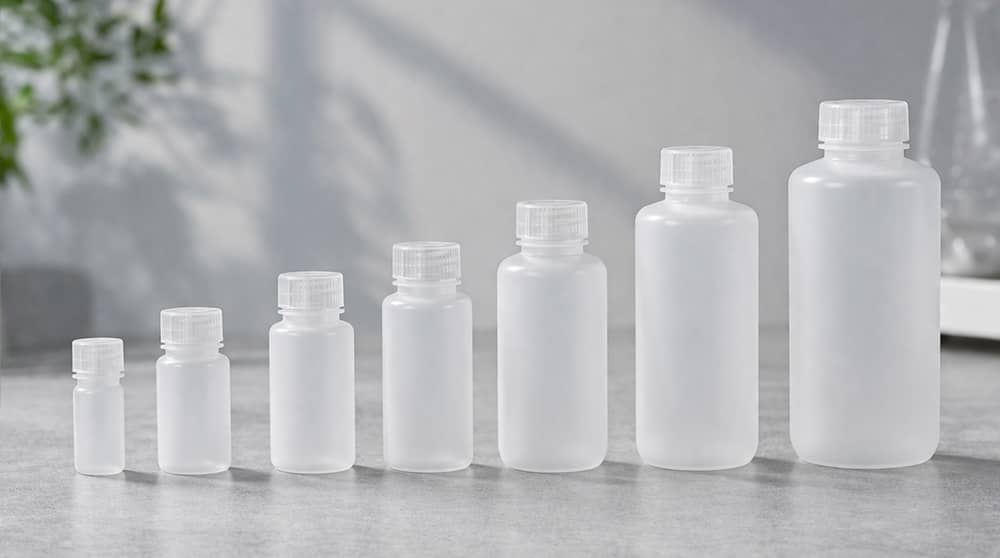
What Are Reagent Containers?
Reagent containers are specialized laboratory vessels used to store, transport, and dispense chemical and biological reagents. These reagents may include:
- Buffers and solutions
- Enzymes and proteins
- Chemical compounds
- Diagnostic reagents
- Culture media
Unlike general-purpose containers, reagent containers are designed to maintain purity, prevent chemical interaction, and withstand laboratory conditions such as temperature fluctuations and sterilization processes.
Why Reagent Containers Are Critical in Biotechnology
In biotechnology research, even minor contamination or degradation can compromise entire experiments.
Key roles of reagent containers include:
1. Preventing Contamination
High-quality containers provide airtight sealing and sterile options, protecting reagents from microbial and environmental contamination.
2. Maintaining Chemical Stability
Certain reagents are sensitive to light, temperature, or oxygen. Proper containers help preserve their integrity.
3. Ensuring Accurate Results
Stable reagents lead to reproducible and reliable experimental outcomes.
4. Supporting Regulatory Compliance
Laboratories must meet strict standards, especially in pharmaceutical and clinical applications.
Types of Reagent Containers Used in Biotech Labs
Different applications require different container designs.
1. Reagent Bottles
Commonly used for liquid reagents such as buffers and solvents. Available in various volumes and shapes.
2. Centrifuge Tubes
Used for small-volume reagents and sample preparation, widely used in molecular biology workflows.
3. Storage Vials
Ideal for high-value or sensitive reagents, including enzymes and antibodies.
4. Wide-Mouth Containers
Suitable for powders, media, or viscous substances, allowing easy access and transfer.
5. Sterile Containers
Pre-sterilized containers used in cell culture and microbiology applications.
Materials Used in Reagent Containers
Material selection directly affects performance and compatibility.
Polypropylene (PP)
- Excellent chemical resistance
- Autoclavable (up to 121°C)
- Widely used in biotech labs
High-Density Polyethylene (HDPE)
- Strong and durable
- Good resistance to acids and solvents
- Suitable for bulk storage
Specialized Materials
- Low-binding plastics for protein storage
- UV-resistant materials for light-sensitive reagents
- Glass for high-purity chemical applications
Choosing the right material ensures that no unwanted reactions occur between the container and the reagent.
Key Features to Consider
When selecting reagent containers, laboratories should evaluate the following features:
Leak-Proof Sealing
Prevents spills and evaporation during storage and transport.
Sterility Options
Essential for sensitive biological experiments and pharmaceutical use.
Temperature Resistance
Containers should withstand freezing (-80°C) and autoclaving conditions.
Chemical Compatibility
Must resist degradation from acids, bases, and solvents.
Graduated Markings
Allow accurate measurement and efficient workflow.
Stackability
Optimizes storage space in refrigerators and freezers.
Common Applications in Biotechnology
Reagent containers are used in a wide range of biotech applications:
Molecular Biology
Storage of PCR reagents, buffers, and nucleic acids.
Cell Culture
Handling media, supplements, and sterile solutions.
Proteomics and Genomics
Storage of enzymes, proteins, and sequencing reagents.
Pharmaceutical Research
Drug development, testing, and quality control.
Diagnostic Laboratories
Handling test kits and chemical reagents.
Common Mistakes to Avoid
Choosing the wrong reagent container can lead to serious issues:
- Using non-sterile containers for sensitive applications
- Selecting materials incompatible with chemicals
- Poor sealing leading to evaporation or contamination
- Using low-quality containers that degrade over time
Avoiding these mistakes is essential for maintaining lab efficiency and data accuracy.
How to Choose the Right Reagent Container Supplier
A reliable supplier should provide:
- Consistent product quality
- A wide range of sizes and designs
- Sterile and non-sterile options
- Customization capabilities
- Compliance with international standards
For laboratories operating across global markets such as the USA, Australia, and the Middle East, stable supply and quality consistency are critical.
Conclusion
Reagent containers are a fundamental component of biotechnology laboratories. They ensure the safety, stability, and integrity of critical reagents, directly influencing the accuracy and reliability of experimental results.
As biotechnology research continues to advance, the demand for high-performance, durable, and contamination-resistant containers will only increase.
Call to Action
Looking for reliable reagent containers for your biotechnology laboratory?Contact us today to get high-quality, customizable solutions designed to meet the demands of modern biotech research and industrial applications.