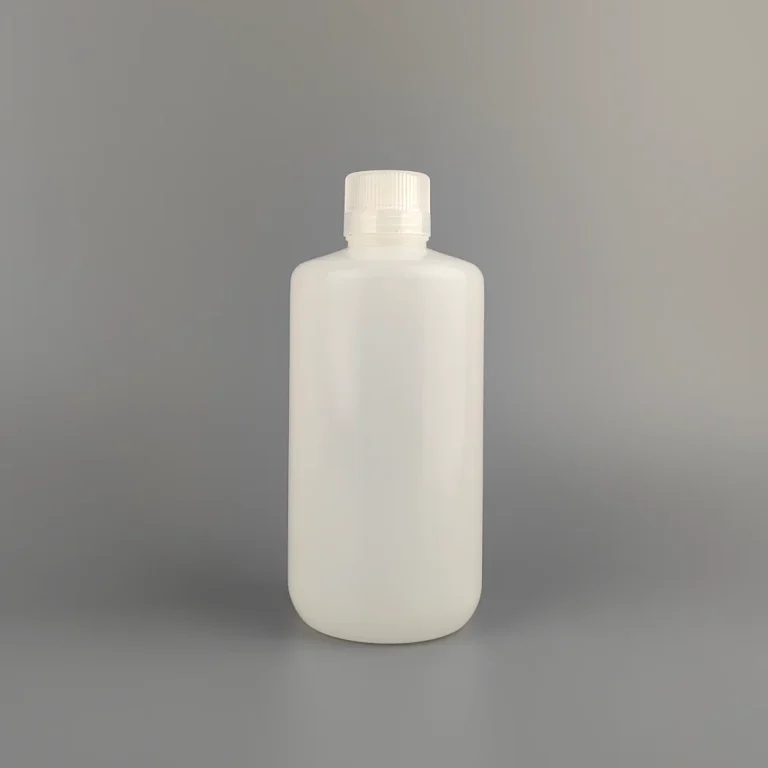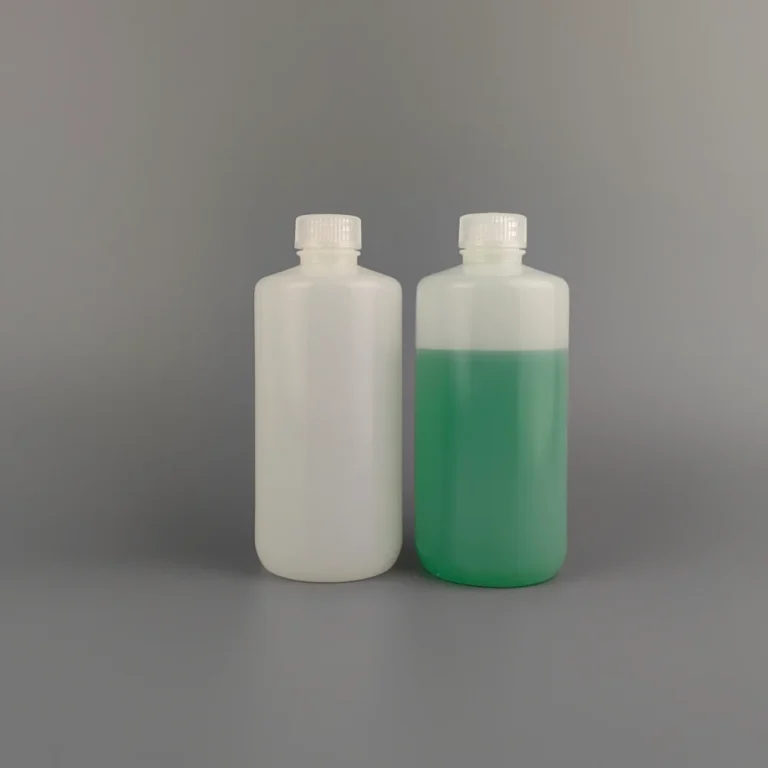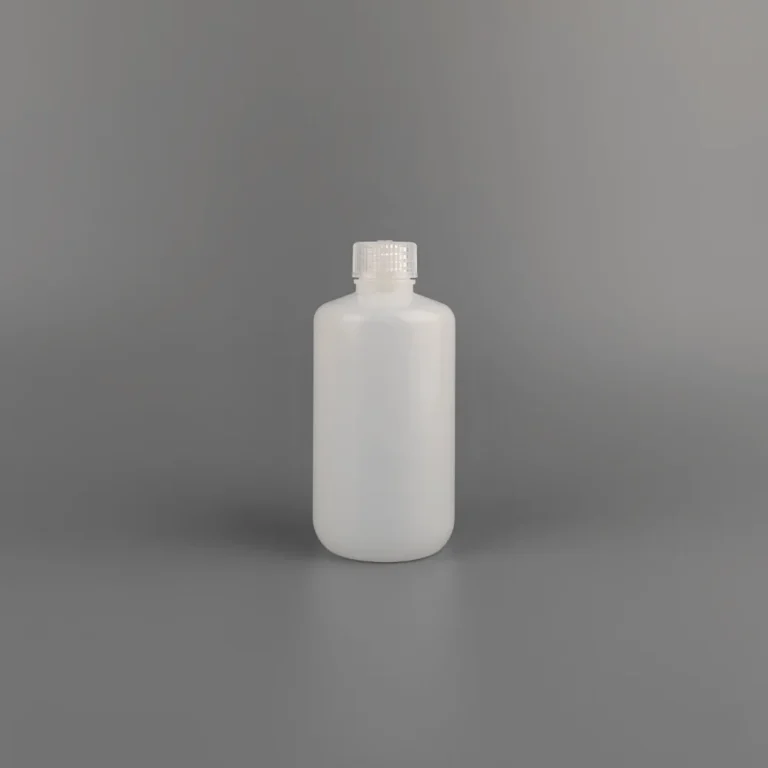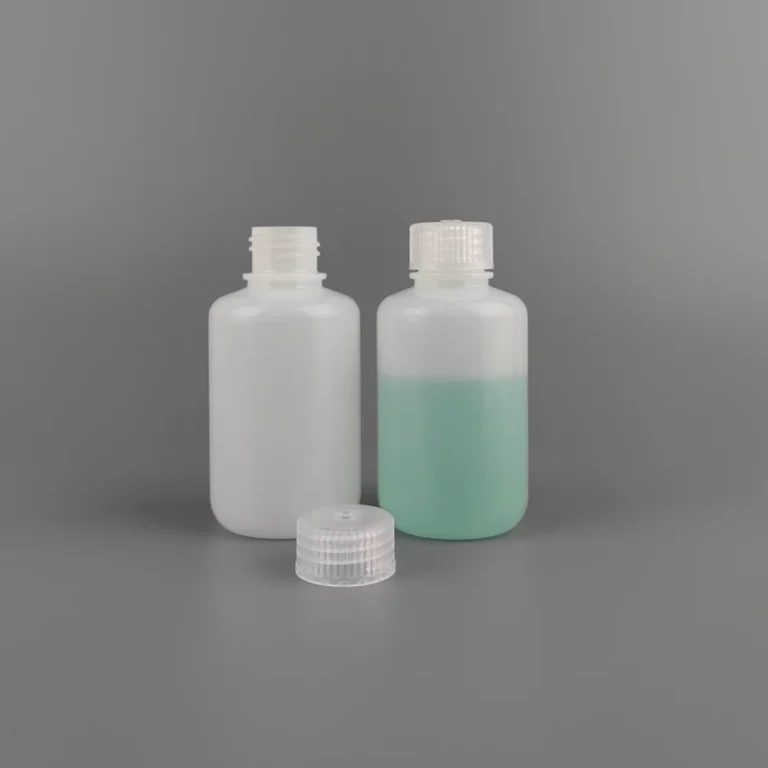
If you ask process engineers what causes the most packaging-related complaints in developer solutions, the answer is rarely “the bottle cracked.”
More often, the problems are subtle.
A bottle arrives with a slight leak after international shipping. A developer formulation changes after months in storage. A laboratory reports unexpected particles during qualification testing. Sometimes the packaging itself becomes the hidden variable that affects process consistency.
For manufacturers supplying PCB chemicals, photo imaging chemicals and laboratory developers, selecting the right bottle for chemical packaging is no longer just a packaging decision—it’s part of process control.
Why Developer Solution Packaging Deserves More Attention
Developer solutions are widely used in PCB manufacturing, photolithography, printed electronics and laboratory imaging applications. Whether the formulation is an alkaline developer, a TMAH-based developer or a specialty photo imaging developer, maintaining chemical stability from production to end use is essential.
Unlike general industrial chemicals, developer solutions are frequently filled into small-volume sample bottles for customer qualification, transported internationally, or stored for extended periods. Each step increases the possibility of contamination, evaporation or leakage if the packaging is not properly designed.:
- Filled into small-volume sample bottles for customer qualification
- Transported internationally by air or sea
- Stored for extended periods before use
- Opened repeatedly during laboratory testing
Each step increases the possibility of contamination, evaporation or leakage if the packaging is not properly designed.
For this reason, many electronics chemical manufacturers now evaluate packaging as part of their overall quality management system rather than treating it as a simple accessory.
What Makes a Reliable Developer Solution Bottle?
Choosing a bottle involves much more than selecting a capacity.
Several factors directly influence storage reliability.
Material Compatibility
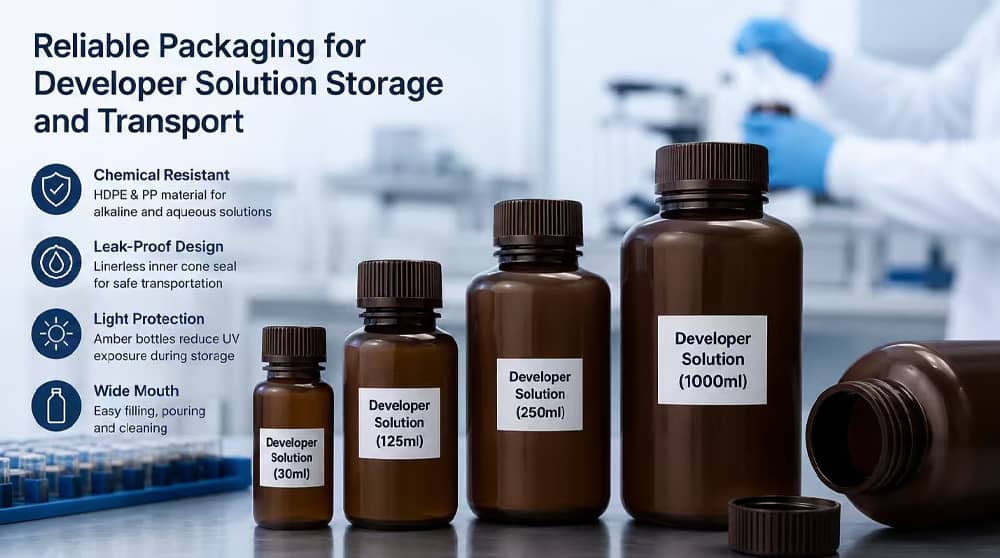
HDPE and PP remain two of the most widely used polymers for laboratory and electronics chemical packaging because they provide excellent resistance to many acids, alkalis, alcohols and aqueous chemical formulations.
For developer solutions used in PCB manufacturing, these materials offer a practical balance between chemical resistance, durability and cost efficiency.
HDPE is often selected for large-volume distribution thanks to its impact resistance and flexibility during transportation.
PP is preferred when higher rigidity or elevated temperature resistance is required, making it a popular option for laboratory and research environments.
Leak-Free Transportation
Transportation is one of the most demanding stages in the packaging lifecycle.
Pressure fluctuations during air freight, vibration during ocean shipping and repeated handling in distribution centers all place stress on bottle closures.
Many conventional chemical bottles still rely on foam liners to create the sealing interface. Over time, certain chemicals may affect these liner materials, increasing the risk of contamination or sealing inconsistency.
A linerless inner cone sealing system addresses this issue by creating a direct plastic-to-plastic seal between the cap and bottle neck, eliminating liner degradation while improving sealing reliability during long-distance transport.
For companies shipping developer samples worldwide, this design offers an additional layer of confidence.
Clean Packaging Starts with Clean Materials
When packaging high-value chemicals, buyers are increasingly asking a different question:
“How clean is the bottle before the chemical is even filled?”
Material purity has become an important consideration, particularly for electronics chemicals, laboratory reagents and specialty formulations.
Rather than relying solely on appearance, many manufacturers now verify packaging quality through standardized testing programs.
Our quality verification process includes evaluations such as:
- Packaging material compatibility assessment
- Pharmaceutical packaging extractables testing
- Absorbance testing for liquid packaging materials
- Bacterial endotoxin (pyrogen) evaluation
- DNase/RNase-free verification for laboratory sample containers
- Sterility testing for reagent bottles
These evaluations are designed to support consistent packaging quality and reduce potential risks associated with contamination, extractables and biological interference when containers are used in demanding laboratory and industrial environments.
While compatibility between the bottle and a specific developer formulation should always be validated by the end user, a well-controlled packaging system provides a stronger foundation for long-term storage and transportation.
Choosing the Right Capacity
The best bottle size depends on where the product is used within the manufacturing process.
Laboratory Research
Recommended sizes:
- 4 ml
- 8 ml
- 15 ml
- 30 ml
Typical applications include:
- Formula development
- Analytical testing
- Internal laboratory validation
Customer Qualification
Recommended sizes:
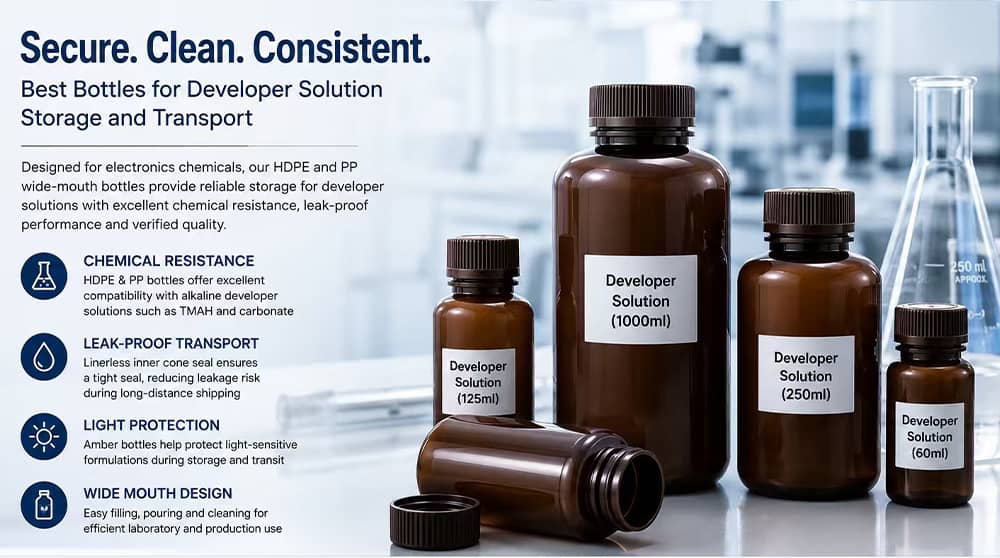
- 60 ml
- 125 ml
- 250 ml
Ideal for:
- Customer sampling
- Pilot production
- Process verification
- International sample shipments
Commercial Distribution
Recommended sizes:
- 500 ml
- 600 ml
- 1000 ml
Suitable for:
- Bulk developer storage
- Production supply
- Regional distribution
- Export packaging
Maintaining the same bottle family across multiple capacities also helps simplify purchasing, labeling and warehouse management.
Why Amber Bottles Are Often Chosen
Although not every developer solution is photosensitive, many manufacturers standardize amber bottles across their chemical product lines.
Using amber containers offers several operational advantages:
- Reduced UV exposure during storage
- Consistent packaging appearance across product families
- Simplified inventory management
- Shared packaging platform for developer solutions, photoresists and UV-curable chemicals
For companies supplying multiple electronics chemicals, standardization often improves operational efficiency while reducing packaging complexity.
Typical Applications
Our amber HDPE and PP reagent bottles are commonly selected for packaging applications involving:
- PCB developer solutions
- Alkaline developer solutions
- TMAH developer sampling
- Photo imaging chemicals
- Laboratory developer reagents
- Electronics process chemicals
- UV-curable process chemicals
- Customer qualification samples
Available capacities range from 4 ml to 1000 ml, allowing manufacturers to use a consistent packaging system from laboratory development through commercial production.For more information on specialized requirements, you can review our dedicated guide on photoresist storage.
The right bottle should do more than simply hold a chemical.
For developer solutions, packaging plays a direct role in transportation reliability, contamination control, operational efficiency and customer confidence.
Selecting chemically resistant HDPE or PP bottles with a linerless sealing system and a well-verified manufacturing process helps create a more stable packaging solution for today’s electronics chemical industry.
As developer formulations continue to evolve, reliable packaging will remain an essential part of delivering consistent product performance from the production line to the end user.