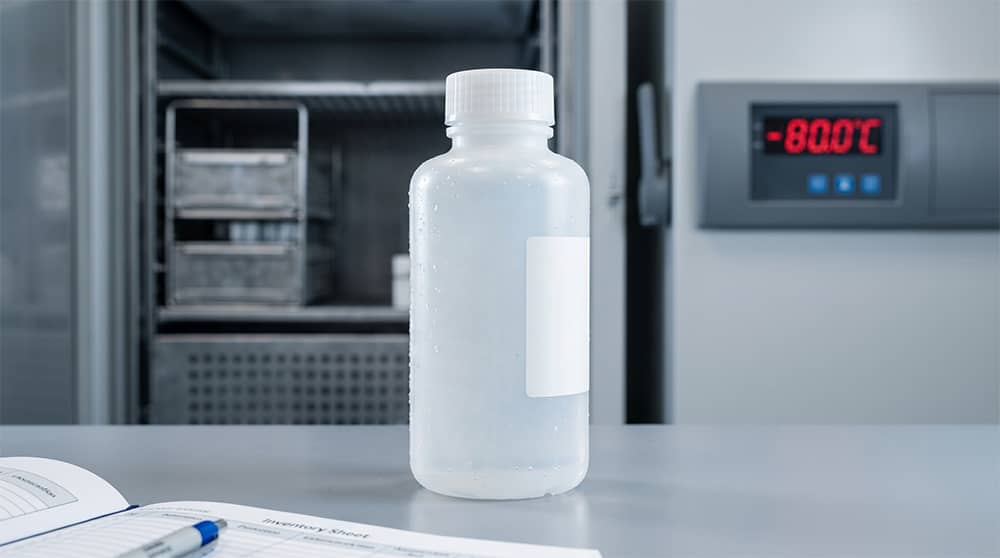
A frozen reagent stock cracking inside a -80°C freezer does more than destroy one sample tube. In many laboratories, a single container failure can contaminate adjacent samples, interrupt long-term studies, and force costly repeat experiments. Storage-related problems are often traced back to incorrect container selection — not instrument performance.
Laboratory storage containers are designed for different chemical, thermal, and mechanical conditions. Material composition, wall thickness, sealing structure, and centrifugation tolerance all influence sample stability during storage and transport.
For procurement teams and laboratory managers, selecting the correct storage container requires evaluating performance data rather than relying only on container shape or volume.
Why Storage Container Selection Matters
Laboratory storage containers are used across multiple workflows:
- Biological sample preservation
- Chemical reagent storage
- Environmental sample retention
- Pharmaceutical formulation handling
- Molecular biology workflows
- Clinical diagnostics
Different applications expose containers to:
- Freeze-thaw cycles
- Autoclaving
- Chemical corrosion
- Centrifugation stress
- Long-term cold storage
The most widely used plastic materials are HDPE and PP.
HDPE Storage Containers
HDPE (High-Density Polyethylene) containers are commonly selected for:
- Chemical storage
- Environmental samples
- Bulk liquid transport
- Industrial laboratory applications
Technical characteristics:
- Strong chemical resistance
- Low moisture absorption
- High impact resistance
- Stable performance under cold storage
- Temperature resistance from -80°C to 121°C
Typical applications include:
| Application | Recommended Container Type |
| Acid and alkali storage | HDPE reagent bottle |
| Environmental sample retention | HDPE wide-mouth bottle |
| Bulk laboratory chemicals | HDPE carboy |
| Waste collection | HDPE safety container |
Technical Insights:
HDPE containers are frequently preferred when laboratories require resistance to aggressive chemical exposure and transportation impact.
PP Storage Containers
Polypropylene (PP) containers are widely used for:
- Sterile storage
- Molecular biology workflows
- Autoclavable applications
- Centrifugation processes
Technical characteristics:
- Autoclavable at 121°C
- Good dimensional stability
- Low extractable profile
- Compatible with sterile production workflows
- Suitable for repeated thermal cycling
Typical applications include:
| Application | Recommended Container Type |
| Sample aliquoting | PP microcentrifuge tube |
| Sterile reagent storage | PP storage bottle |
| Cell culture preparation | PP conical tube |
| Frozen biological samples | PP cryogenic vial |
Lab Tips:
PP containers generally provide better thermal endurance during repeated autoclave sterilization cycles.
Main Types of Laboratory Storage Containers
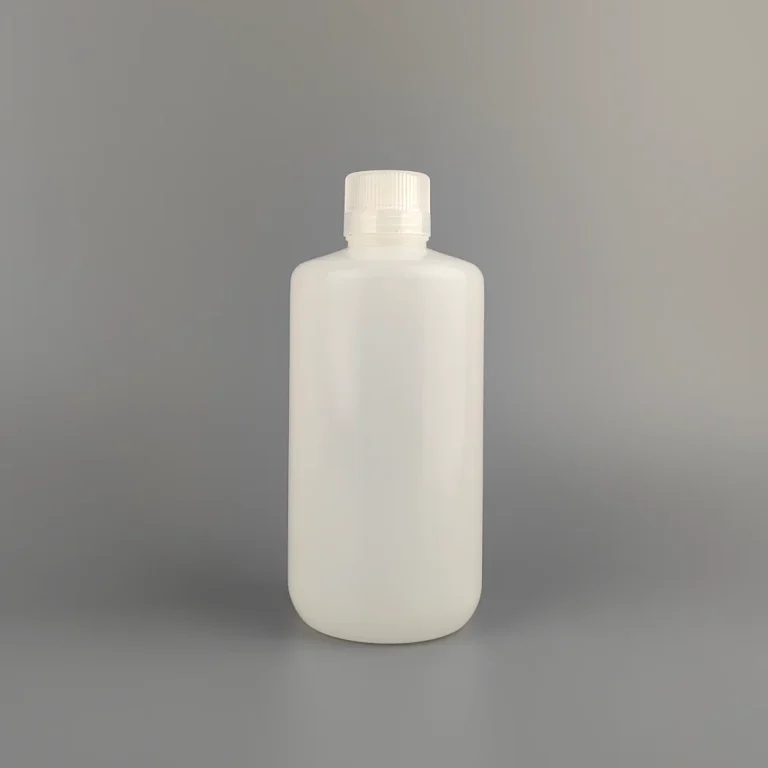
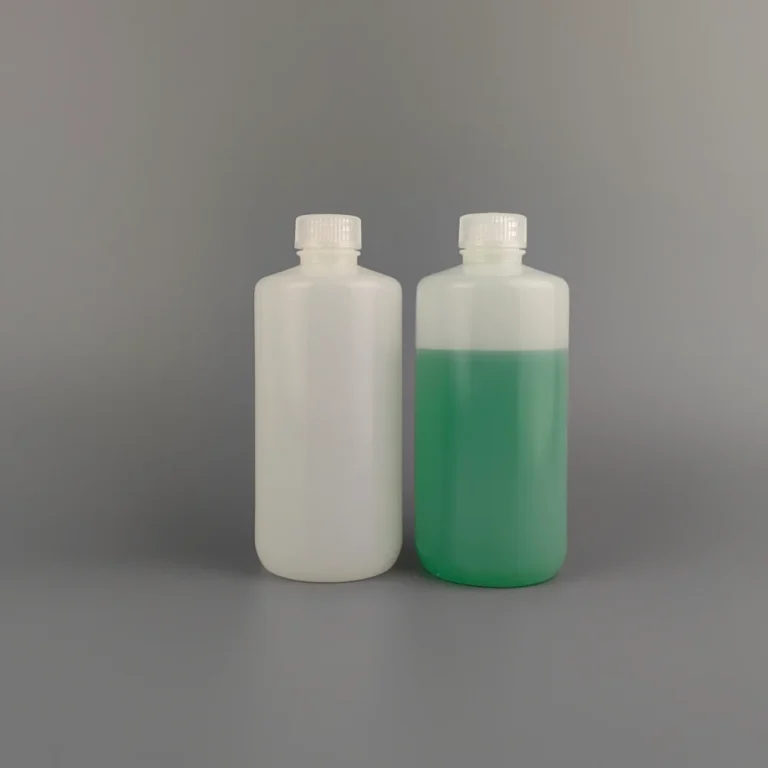
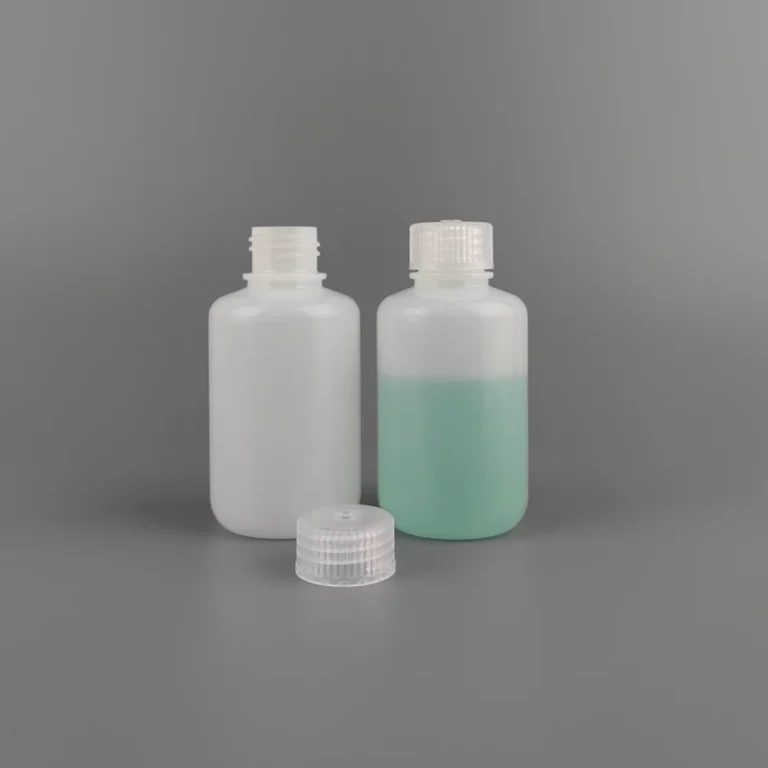
1. Reagent Bottles
Reagent bottles are used for:
- Chemical storage
- Buffer preparation
- Solution handling
Common features:
- Leak-proof screw caps
- Graduation markings
- Wide-mouth or narrow-mouth options
- Thick-wall construction
Typical wall thickness:
| Bottle Capacity | Wall Thickness |
| 100–250 mL | 1.0–1.8 mm |
| 500–1000 mL | 1.8–2.8 mm |
| Large-volume bottles | 2.5–3.5 mm |
2. Centrifuge Tubes
Centrifuge tubes are designed for:
- Sample separation
- Pellet collection
- Molecular biology workflows
Critical performance factors:
- Max RCF tolerance
- Thread precision
- Base reinforcement
- Cap sealing performance
Typical specifications:
| Tube Type | Max RCF |
| Standard PP centrifuge tube | 8,000–12,000 × g |
| High-performance reinforced tube | Up to 20,000 × g |
Technical Insights:
Higher Max RCF performance requires consistent wall thickness and reinforced shoulder geometry.
3. Cryogenic Storage Vials
Cryovials are used for:
- Cell banking
- DNA/RNA storage
- Biopharmaceutical sample preservation
Required characteristics:
- Ultra-low temperature resistance
- Secure sealing systems
- Dimensional stability during freezing
Recommended specifications:
| Property | Typical Range |
| Temperature resistance | -80°C to 121°C |
| Material | Medical-grade PP |
| Seal structure | Internal or external thread |
Lab Tips:
External thread cryovials reduce contamination risk around cap sealing areas.
4. Carboys and Bulk Containers
Large-volume containers are commonly used for:
- Water purification systems
- Media preparation
- Chemical transport
- Waste handling
Key design requirements:
- Thick-wall durability
- Integrated handles
- Leak-proof dispensing systems
- High impact resistance
Typical materials:
- HDPE for chemical compatibility
- PP for sterilizable workflows
5. Sample Storage Boxes and Secondary Containers
Secondary storage systems help laboratories:
- Organize samples
- Reduce cross-contamination
- Improve freezer efficiency
Common formats include:
- Cryoboxes
- Tube racks
- Freezer storage trays
- Secondary containment bins
Important considerations:
- Low-temperature stability
- Moisture resistance
- Structural rigidity
Checklist: How to Select Laboratory Storage Containers
Verify Temperature Requirements
Check whether the workflow involves:
- Deep freezing
- Dry ice transport
- Steam sterilization
- Repeated thermal cycling
Recommended operating range for laboratory-grade HDPE and PP containers:
| Material | Temperature Resistance |
| HDPE | -80°C to 121°C |
| PP | -80°C to 121°C |
Evaluate Leak-proof Design
Leakage can result in:
- Sample loss
- Cross-contamination
- Equipment damage
Reliable leak-proof systems typically include:
- Precision threaded caps
- Silicone or TPE sealing rings
- Torque-controlled closures
Common validation tests:
- Inverted storage testing
- Vacuum leak testing
- Drop testing
- Pressure simulation
Confirm Chemical Compatibility
Different polymers interact differently with:
- Organic solvents
- Acids and alkalis
- Alcohol-based reagents
- Oxidizing chemicals
Material compatibility testing should be part of procurement validation.
Assess Wall Thickness Consistency
Wall thickness affects:
- Freeze resistance
- Mechanical durability
- Centrifugation stability
Uneven molding increases the probability of stress cracking during low-temperature storage.
Review Sterility Requirements
For molecular biology or pharmaceutical applications, procurement teams may require:
- DNase/RNase-free certification
- Pyrogen-free validation
- Gamma sterilization compatibility
- Cleanroom production documentation
Technical Specifications Comparison
| Specification | HDPE Containers | PP Containers |
| Material Type | High-Density Polyethylene | Polypropylene |
| Temperature Resistance | -80°C to 121°C | -80°C to 121°C |
| Chemical Resistance | Excellent | Strong |
| Autoclavable | Limited repeated cycles | Suitable for repeated cycles |
| Wall Thickness Range | 1.0–3.5 mm | 0.8–2.5 mm |
| Leak-proof Design | Threaded cap + liner | Threaded cap + sealing ring |
| Max RCF | Up to 5,000 × g | Up to 20,000 × g |
| Typical Applications | Chemical storage | Sterile and biological storage |
Common Storage Problems Laboratories Encounter
Container cracking during freezing
Often caused by:
- Thin-wall structures
- Poor resin quality
- Uneven wall thickness
Leakage during transportation
Frequently linked to:
- Improper cap tolerances
- Weak sealing ring compression
- Inconsistent molding accuracy
Sample degradation from material interaction
Certain low-grade plastics may release extractables or adsorb sensitive compounds.
Deformation after autoclaving
Containers not designed for repeated thermal exposure may lose dimensional stability.
From a Supplier’s Perspective: What Procurement Teams Usually Check
Laboratories commonly evaluate suppliers based on:
- Batch consistency
- Mold precision
- Sterility validation
- Packaging cleanliness
- Leak testing standards
- Export packaging durability
- Production traceability
For long-term procurement projects, dimensional consistency across production batches is often more important than cosmetic appearance.
JSBIO Lab Tips for Laboratory Storage Workflows
Recommended for Chemical Storage
- Thick-wall HDPE bottles
- Leak-proof liner systems
- Wide-mouth formats for easy handling
Recommended for Biological Samples
- Medical-grade PP cryovials
- Reinforced sealing systems
- Low-temperature validated materials
Recommended for High-Speed Centrifugation
- Reinforced PP centrifuge tubes
- Uniform wall thickness
- High Max RCF certified structures
Request Samples or Technical Support
Selecting storage containers based only on catalog specifications may not reflect actual laboratory conditions.
Option A — Request free samples for validation
Laboratories can test:
- Leak-proof performance
- Freeze-thaw resistance
- Autoclave compatibility
- Chemical resistance
- Centrifugation stability
Option B — Get a bulk quote and customization details
Available customization options may include:
- Custom volumes
- Cap color coding
- Graduation printing
- Sterile packaging
- OEM labeling
- Export carton optimization
- Custom wall thickness configurations