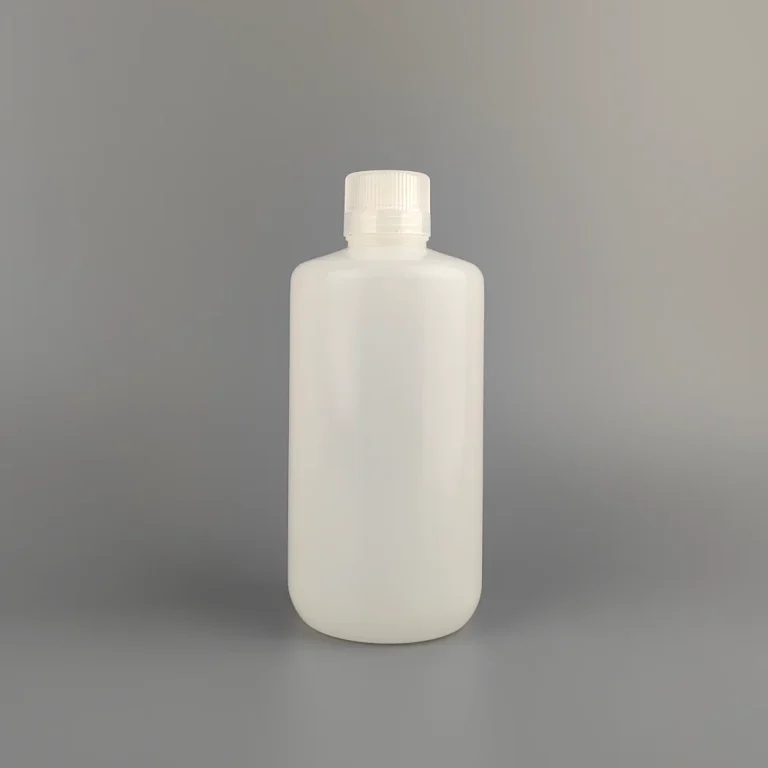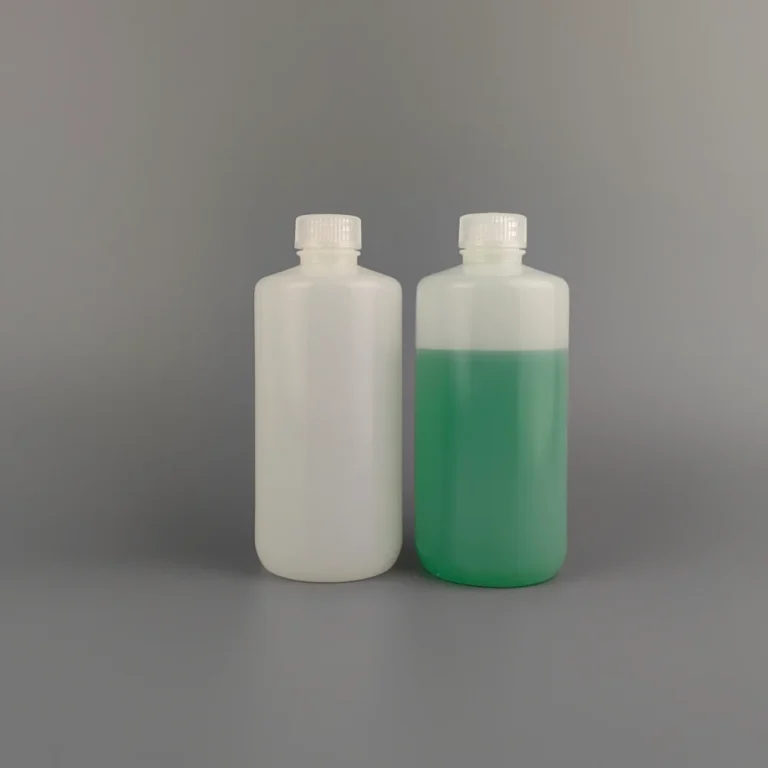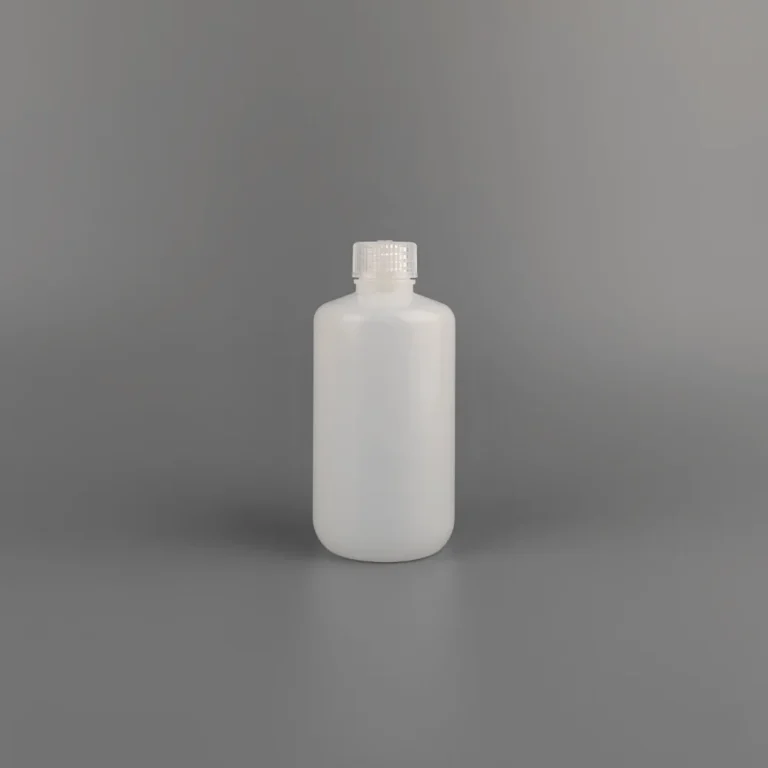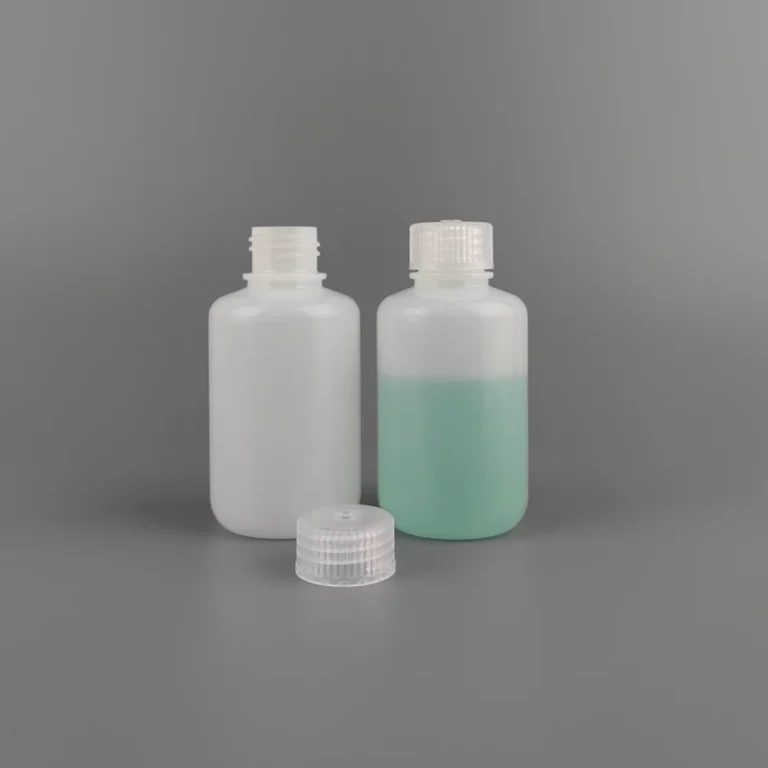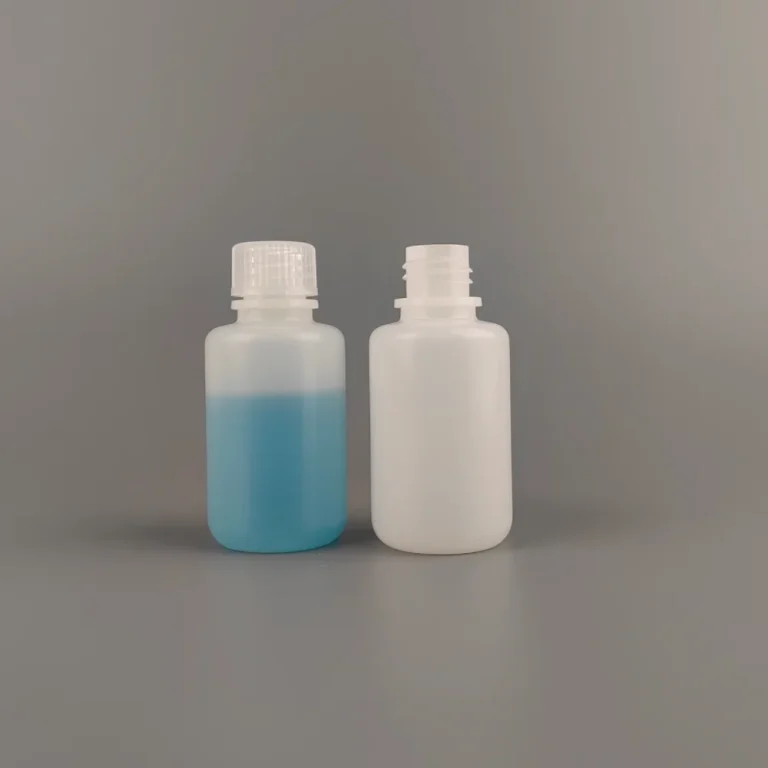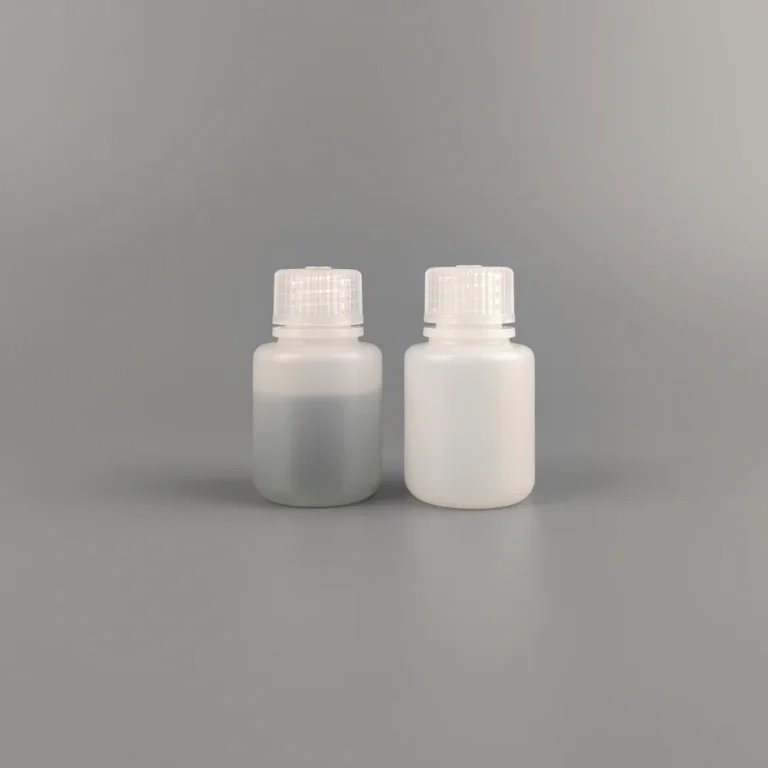
If a reagent shows trace contamination after storage—even when the container is labeled “food-safe”—the issue is not labeling, it’s grade mismatch. Food-grade materials can pass migration limits for consumption, yet still introduce extractables that interfere with assays or stability studies. In other cases, a cap that performs well for beverages fails leak tests after autoclaving, leading to evaporation and concentration drift. These are specification gaps, not handling errors.
From 15 years at JSBIO, the difference between food-grade and lab-grade containers is defined by material purity, process control, wall thickness consistency, sealing design, temperature tolerance (-80°C to 121°C), and mechanical limits (Max RCF)—not just compliance claims.
Technical Insights: What “Grade” Actually Controls
“Food-grade” focuses on safety for ingestion under defined conditions.
“Lab-grade” focuses on data integrity and contamination control across workflows.
Key differentiators:
- Extractables & leachables profile
- Particulate and bioburden control
- Thermal performance (autoclave compatibility)
- Sealing reliability over cycles
- Batch-to-batch consistency (wall thickness, geometry)
A container can be food-safe yet unsuitable for analytical or biological work.
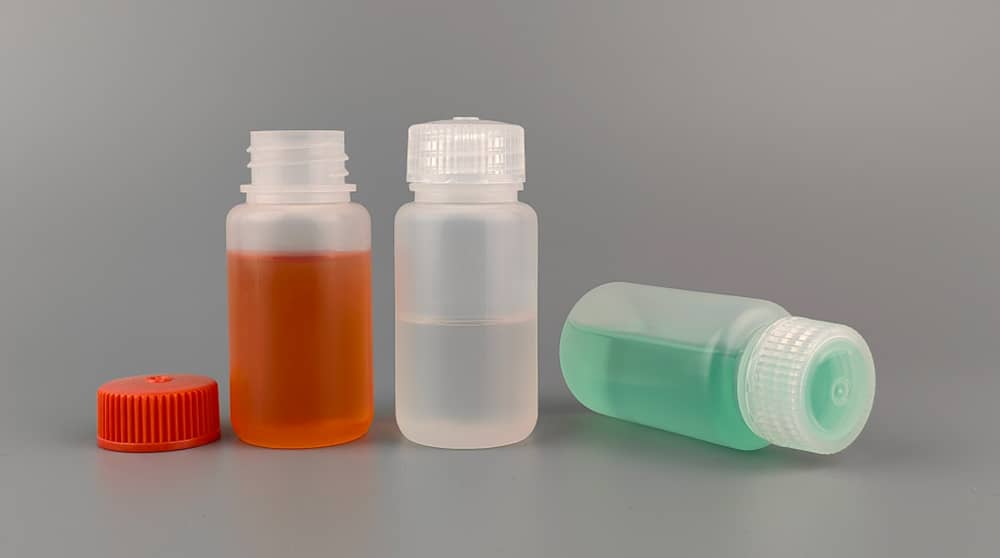
Material Baselines (PP vs HDPE)
Polypropylene (PP) – Typical Lab-Grade Platform
- Temperature Range: -80°C to 121°C
- Max RCF: up to 15,000–20,000 × g
- Wall Thickness: high precision, uniform
- Sealing: multi-thread + leak-proof gasket
Lab-grade PP focuses on:
- Low extractables
- Autoclavability
- Dimensional stability after cycles
- Compatibility with centrifugation
High-Density Polyethylene (HDPE) – Common in Food & Chemical Storage
- Temperature Range: -50°C to 110°C
- Max RCF: low
- Wall Thickness: moderate
- Sealing: threaded cap, optional gasket
HDPE is widely used in food-grade applications due to:
- Chemical resistance
- Cost efficiency
- Processability
But standard food-grade HDPE may not meet lab-grade purity or thermal requirements.
Extractables & Leachables: Core Difference
Food-Grade
- Meets migration limits for food contact
- Additives (stabilizers, slip agents) are permitted within limits
Lab-Grade
- Controlled extractables profile
- Reduced additives or tightly specified formulations
- Designed to minimize interference with assays
Impact on samples:
- Trace leachables can affect pH, enzyme activity, or analytical results
Wall Thickness and Process Consistency
Wall thickness affects:
- Permeation rate
- Thermal deformation
- Mechanical strength
Food-Grade Production
- Optimized for cost and volume
- Wider tolerance in wall thickness
Lab-Grade Production (JSBIO approach)
- Controlled wall thickness uniformity
- Reinforced stress zones (base, thread)
- Tight dimensional tolerances
Result:
- Reduced variability across batches
- Improved performance in stability and analytical workflows
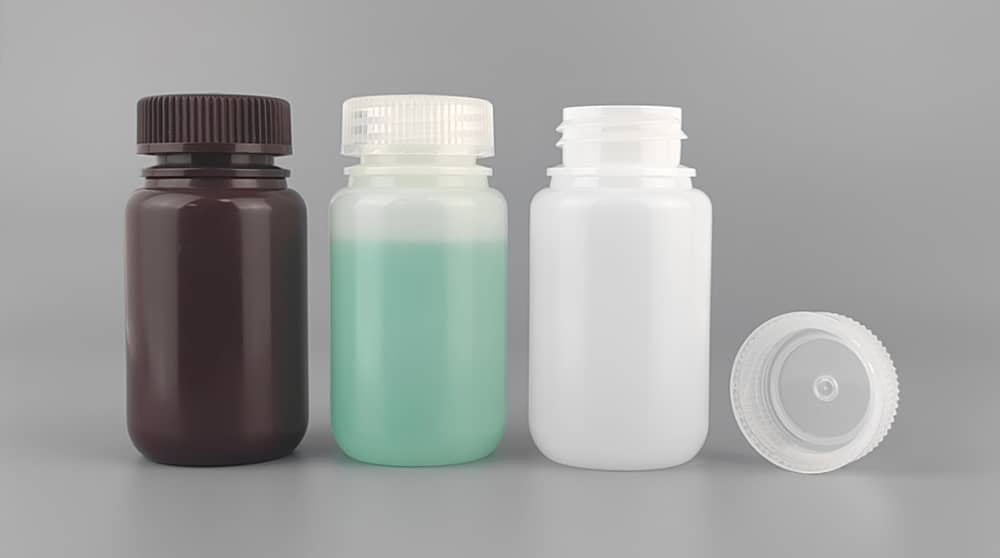
Sealing Design and Contamination Control
Sealing is a key separator between grades.
Food-Grade Containers
- Standard threaded caps
- Basic liners or no gasket
- Designed for short- to mid-term storage
Lab-Grade Containers
- Multi-thread closure
- Integrated leak-proof gasket design
- Torque-controlled sealing
Performance impact:
- Reduced evaporation and ingress
- Stable sealing after temperature cycling
- Lower contamination risk
Temperature Performance
Food-Grade
- Typically designed for ambient to moderate heat
- Limited validation at 121°C autoclave conditions
Lab-Grade (PP)
- Validated -80°C to 121°C
- Maintains geometry and seal after cycles
Failure modes when mismatched:
- Cap deformation after autoclave
- Loss of sealing torque
- Sample contamination
Mechanical Performance and Centrifugation (Max RCF)
Food-Grade Containers
- Not designed for centrifugation
- Structural deformation under stress
Lab-Grade PP Containers
- Max RCF: up to 15,000–20,000 × g
- Reinforced structure for mechanical stability
Impact:
- Safe processing without leakage or breakage
Permeability and Storage Stability
- Food-Grade HDPE: acceptable for food shelf life
- Lab-Grade PP/HDPE: optimized for reduced variability in permeation
For sensitive samples:
- Lower and more predictable permeability improves data consistency
Technical Specifications Comparison
| Parameter | Food-Grade Containers | Lab-Grade Containers (PP/HDPE) |
| Temperature Range | Ambient to moderate | -80°C to 121°C (PP) |
| Autoclavable | Limited | Yes (PP) |
| Max RCF | Not specified | Up to 20,000 × g (PP) |
| Extractables Control | Moderate | Controlled/low |
| Wall Thickness Control | Standard tolerance | High precision |
| Leak-proof Design | Basic | Advanced (gasket + thread) |
| Sealing Stability | Moderate | High |
| Batch Consistency | Moderate | Tight control |
| Suitability for Lab Use | Limited | High |
Lab Tips: Choosing Between Food-Grade and Lab-Grade
✔ Use lab-grade containers for analytical, biological, or pharmaceutical work
✔ Select PP for workflows requiring -80°C to 121°C
✔ Verify extractables requirements for sensitive assays
✔ Check wall thickness consistency for stability studies
✔ Ensure leak-proof gasket design for long-term storage
✔ Avoid using food-grade containers in sterile or high-precision workflows
Common Mistakes in Procurement
- Assuming “food-grade” equals “lab-safe”
- Using food containers in autoclave cycles
- Ignoring extractables in analytical testing
- Overlooking sealing performance
- Selecting based on price without validation
These issues typically appear during validation or stability studies.
From a Supplier’s Perspective
“Grade” is defined by process control and validation, not just material name.
In OEM lab-grade projects, we optimize:
- PP material grade for low extractables
- Wall thickness distribution and tolerances
- Gasket material for sealing and chemical compatibility
- Thread geometry for torque stability
Two containers made from the same base polymer can perform differently depending on these controls.
Practical Selection Checklist
Before selecting containers:
✔ Is the application analytical or biological?
✔ Are extractables a concern?
✔ Is temperature range up to -80°C to 121°C required?
✔ Is centrifugation involved (check Max RCF)?
✔ Is wall thickness uniform and controlled?
✔ Does the design include a leak-proof gasket?
CTA (For Procurement Decision)
If you are evaluating food-grade vs lab-grade containers:
A. Request free samples for validation
→ Test extractables, sealing, and thermal performance in your workflow
B. Get a bulk quote and customization details
→ Define material grade, wall thickness, and sealing system
If you can share your application (analytical testing, storage duration, temperature, compliance requirements), I can map that to a specific lab-grade container specification.