
Introduction
When choosing laboratory sample storage containers, one of the most common questions is: Polypropylene (PP) or High-Density Polyethylene (HDPE)—which one is better?
Both materials are widely used in laboratories due to their durability, chemical resistance, and cost-effectiveness. However, they differ significantly in performance depending on temperature, chemical exposure, and application requirements.
From biotechnology labs in the USA to environmental testing facilities in Australia and the Middle East, selecting the right material is essential for ensuring sample integrity and operational efficiency.
In this guide, we compare PP and HDPE sample containers to help you choose the best option for your laboratory needs.
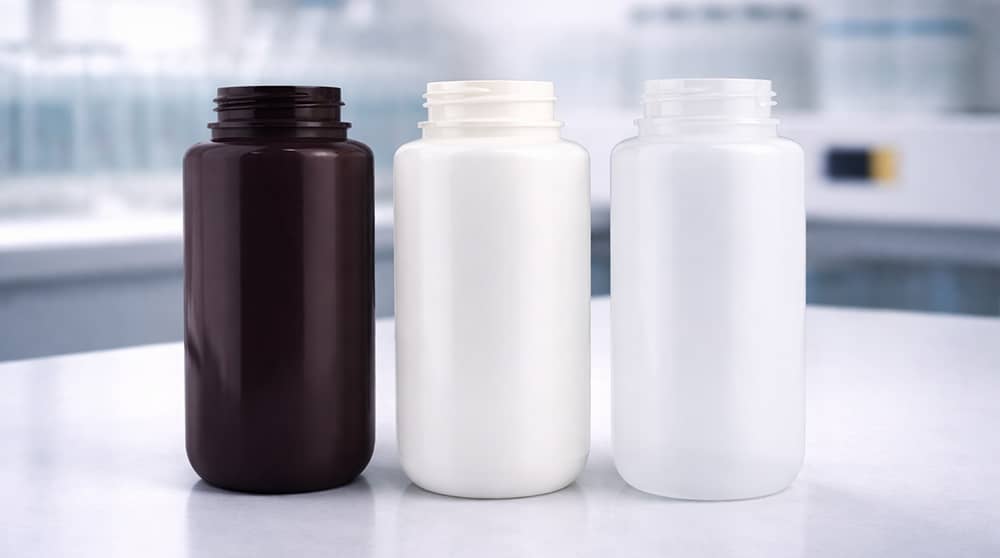
What Are PP and HDPE Containers?
Polypropylene (PP)
PP is a lightweight, rigid plastic commonly used in laboratory containers, centrifuge tubes, and reagent bottles. It is known for its high temperature resistance and excellent chemical stability.
High-Density Polyethylene (HDPE)
HDPE is a tough and flexible plastic widely used for bottles, bulk containers, and transport packaging. It offers excellent impact resistance and durability, especially in demanding environments.
Key Differences Between PP and HDPE Containers
1. Temperature Resistance
One of the biggest differences between PP and HDPE is how they handle temperature.
- PP: Can withstand high temperatures and is autoclavable (up to ~121–135°C)
- HDPE: Not suitable for high heat; softens at lower temperatures and is generally not autoclavable
Conclusion:
If your application involves sterilization or high heat, PP is the better choice.
2. Chemical Resistance
Both materials perform well, but there are differences depending on the chemical type.
- HDPE: Excellent resistance to acids, bases, alcohols, and many chemicals
- PP: Strong resistance, especially to organic solvents and high-concentration chemicals
Conclusion:
- General chemicals → both work
- Strong solvents → PP has an advantage
3. Low-Temperature Performance
- HDPE: Maintains flexibility and impact resistance even in freezing conditions
- PP: Can become brittle at low temperatures and may crack
Conclusion:
For cold storage or transport, HDPE is better.
4. Mechanical Strength and Durability
- PP: Higher stiffness and tensile strength
- HDPE: More flexible and impact-resistant
Conclusion:
- Need rigidity → PP
- Need toughness (drop resistance) → HDPE
5. Transparency and Usability
- PP: Semi-transparent, easier to observe contents
- HDPE: Opaque, harder to visually check levels
Conclusion:
For lab workflows requiring visibility, PP is more user-friendly.
6. Sterilization Compatibility
- PP: Suitable for autoclaving and repeated sterilization
- HDPE: Not recommended for high-temperature sterilization
Conclusion:
For biotech and microbiology labs, PP is the standard choice.
PP vs HDPE: Quick Comparison Table
| Feature | PP (Polypropylene) | HDPE (High-Density Polyethylene) |
| Heat Resistance | Excellent (autoclavable) | Moderate |
| Chemical Resistance | Excellent (especially solvents) | Excellent (acids & bases) |
| Cold Resistance | Moderate (can become brittle) | Excellent |
| Strength | Rigid, Durable | Flexible, impact-resistant |
| Transparency | Semi-transparent | Opaque |
| Sterilization | Yes | No |
Which One Should You Choose?
Choose PP Containers If You Need:
- High-temperature sterilization (autoclaving)
- Storage of sensitive biological samples
- Better visibility of contents
- Resistance to organic solvents
Ideal for:
- Biotechnology labs
- Molecular biology
- Pharmaceutical research
Choose HDPE Containers If You Need:
- Strong impact resistance
- Cold storage or freezing conditions
- Bulk storage or transportation
- Cost-effective large-volume containers
Ideal for:
- Environmental sampling
- Chemical storage
- Field applications
Common Applications in Laboratories
PP Containers Are Widely Used For:
- DNA/RNA storage
- Enzyme and reagent bottles
- Cell culture applications
HDPE Containers Are Widely Used For:
- Water and soil sampling
- Chemical transport
- Industrial laboratory storage
Common Mistakes to Avoid
When choosing between PP and HDPE, laboratories often make these mistakes:
- Selecting HDPE for high-temperature sterilization
- Using PP in ultra-low temperature environments
- Ignoring chemical compatibility
- Choosing based only on cost rather than application
Avoiding these mistakes ensures better sample safety and performance.
Conclusion
There is no one-size-fits-all answer to whether PP or HDPE sample containers are better—it depends entirely on your application.
- PP is ideal for high-temperature, sterile, and biotech applications
- HDPE is better for durability, cold storage, and bulk handling
Understanding these differences allows laboratories to choose the right material, ensuring sample integrity, operational efficiency, and reliable results.
Call to Action
Not sure whether PP or HDPE containers are right for your application?